In This Article
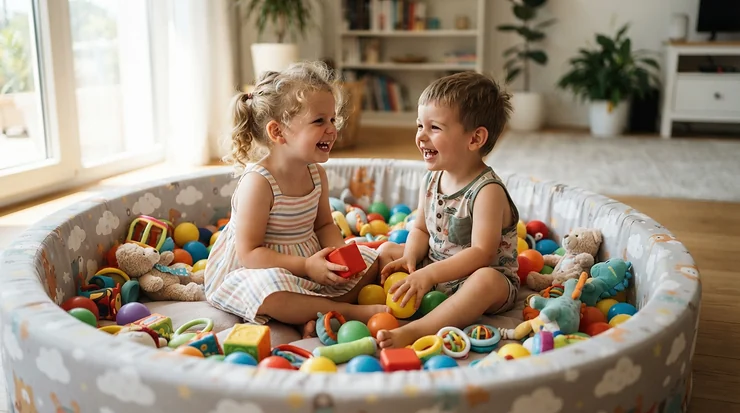
Every parent knows the wet-Tuesday problem. The garden is a bog, the soft play centre costs a small fortune, and your toddler has the energy of a caffeinated spaniel. A ball pit pool for toddlers is one of the few purchases that solves this and then goes on solving it in July as well. It is a small, contained, cushioned play zone that can hold plastic balls in winter and a few centimetres of water in summer.
The catch is that the label is slippery. Some products sold as a ball pit pool for toddlers are inflatable paddling pools that happen to take balls. Others are foam or fabric pits that must never see a drop of water. A third group are inflatable tent-style hybrids with tunnels and mesh walls.
I built this guide from manufacturer specifications and the published review sentiment I could verify, not from claimed hands-on testing. Where I couldn’t verify reviews, I say so. Along the way I’ll cover three questions that matter more than any colour scheme:
- Soft-sided safety: how forgiving the walls are when a toddler face-plants.
- Low entry height: how easily a wobbly walker gets in and out.
- Indoor-outdoor flexibility: whether the pool earns its keep in every season.
Seven real products follow, then the buying framework. Let’s get into it.
Quick Comparison: Best Ball Pit Pool for Toddlers at a Glance
| Product | Type | Size (per listing) | Ballpark price | Best For |
|---|---|---|---|---|
| Bestway Canopy Play Pool | Inflatable pool + shade | 140 × 140 × 114 cm | Around £30–£60 | Bestway Canopy Play Pool: sunny gardens |
| Bestway Up, In & Over Paddling Pool | Inflatable pool + 50 balls | 91 × 20 cm | Under £25 | Bestway Up, In & Over Paddling Pool: tight budgets |
| Bestway Tunneltopia Ball Pit | Inflatable tent-style hybrid | 178 × 91 × 70 cm | Around £35–£60 | Bestway Tunneltopia Ball Pit: adventurous crawlers |
| Intex Duckling Snapset Pool | Rigid-sidewall paddling pool | 122 × 25 cm | Under £30 | Intex Duckling Snapset Pool: wobbly first walkers |
| GYMAX Kids Ball Pit | Foam pit + 200 balls | 90 × 90 × 30 cm | Around £40–£70 | GYMAX Kids Ball Pit: indoor-only play |
| DIVCHI Foam Ball Pit | Memory foam + 200 balls | 90 × 30 cm | Around £35–£65 | DIVCHI Foam Ball Pit: living-room style |
| Mineup Foldable Ball Pit | Foldable fabric pit | 80 or 100 cm options | Around £25–£45 | Mineup Foldable Ball Pit: small flats |
I couldn’t pull live Amazon prices, so treat these as ballparks and check current price before buying. The Bestway Canopy Play Pool is the only option here that handles shade, water and balls in one purchase. The Bestway Up, In & Over Paddling Pool is the cheapest way to test whether your toddler cares about balls at all. The foam options, GYMAX Kids Ball Pit, DIVCHI Foam Ball Pit and Mineup Foldable Ball Pit, are dry-only, so they suit families who want a living-room fixture and not a garden splash zone.
💬 Just one click — help others make better buying decisions too!😊
Top 7 Ball Pit Pool for Toddlers: Expert Analysis
Each pick below gets the same treatment: what the specs mean in practice, who it suits, what reviewers report where I could verify it, and a straight value verdict.
1. Bestway Canopy Play Pool — best for shade-first garden play
The removable canopy is the headline. It shields a toddler’s skin and doubles as a visual boundary that keeps balls from escaping into the flower beds.
This pool is listed at roughly 140 × 140 × 114 cm with a 265-litre capacity. A soft inflatable floor cushions knees and protects against stones, and the canopy attaches with simple fasteners. On paper, that floor matters more than the water capacity. Toddlers spend most of their time sitting, crawling and tumbling, so a padded base is what makes it a genuine ball pit pool for toddlers, not merely a paddling pool with ambitions.
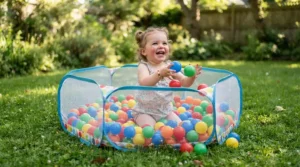
This is the pick if you have a lawn and a sunny afternoon problem. Amazon UK’s review summary for Bestway’s shaded canopy paddling pool shows most reviewers rating quality positively (23 of 26 who mentioned it). Buyers like the shade and the value. The recurring complaints are that the roof can lean to one side and that some units struggle to stay inflated. Inflate it fully and check the valves.
Pros:
- ✅ Removable canopy gives real sun protection
- ✅ Soft inflatable floor cushions knees and falls
- ✅ Works as pool or ball pit
Cons:
- ❌ Canopy can sag sideways, according to some reviewers
- ❌ Bulky to store once deflated
Expect to pay in the £30–£60 region. That is fair value for a pool that covers three jobs.
2. Bestway Up, In & Over Paddling Pool — best budget entry with balls included
Balls are in the box. That single detail makes this the friendliest first step into ball pit territory.
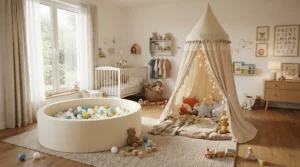
The listing describes a 91 × 20 cm vinyl pool with 50 play balls and a self-adhesive repair patch, recommended for ages 2 and up and usable indoors or out. The maths is worth knowing. Fifty balls in a 91 cm circle will cover the floor in a thin, sparse layer, not a deep, swimmable drift. Think of it as a ball puddle. Most parents will want another 100 or so if the aim is real burying and scooping.
It suits parents who want to see whether a toddler actually likes this kind of play before investing in something larger. The 20 cm wall is a friendly height for small legs. I couldn’t verify a robust aggregated review summary for this specific listing, so I’d rather say that than invent one.
Pros:
- ✅ Play balls and repair patch included
- ✅ Low wall suits early walkers
- ✅ Quick to inflate and easy to store
Cons:
- ❌ Fifty balls only give a shallow layer
- ❌ Vinyl walls are less sturdy than rigid designs
Under £25 is a sensible expectation. Check current price, and budget a few pounds for extra balls.
3. Bestway Tunneltopia Ball Pit — best for crawl-through adventure
Most pits are a bath of balls. The Tunneltopia adds a tunnel entrance, so entering becomes half the game.
According to the retailer listings, it measures about 178 × 91 × 70 cm, weighs around 2.6 kg, and includes 25 balls. It has mesh walls so you can see in, a round door at the back, and a ball-sorting game on the rear wall. It sits squarely between a ball pit pool and a tent, which makes it the most relevant product here for anyone weighing ball pit pool vs ball pit tent. The mesh lets you watch from the sofa. The tunnel gives toddlers a hide-and-seek loop that a plain pool can’t.
One thing to check: Amazon UK’s listing carries a warning that the item is not suitable for children under 3, while retailers such as Argos list it for ages 2 and over. Read the packaging carefully and decide with your own child’s development in mind. I couldn’t verify a review summary I’d trust here.
Pros:
- ✅ Tunnel entrance adds imaginative play
- ✅ Mesh walls keep toddlers visible
- ✅ Folds flat for storage
Cons:
- ❌ Only 25 balls included
- ❌ Not designed as a water pool
Expect around £35–£60. It’s a fun choice if your toddler is a confident crawler.
4. Intex Duckling Snapset Pool — best for wobbly first walkers
Height is the story here. At about 25 cm high, it is easy to step into, and the rigid sidewall means it doesn’t squish when a toddler leans on it.
The listing gives 122 × 25 cm, a duck-and-fish design, rigid sidewalls, and a repair patch (model 58477NP). That combination delivers strong low entry height for a small, unsteady body. The wall holds its shape, which helps for soft-sided safety when a toddler grabs the edge to pull up. It also gives you a real paddling pool with enough width for a sibling to sit alongside.
It isn’t marketed as a ball pit, so you’ll supply the balls, but the shallow bowl suits them well. I couldn’t verify a reliable review summary, so expect to check recent buyer feedback on the listing.
Pros:
- ✅ Around 25 cm wall is easy to step over
- ✅ Rigid sidewall holds its shape
- ✅ Simple shape stores easily
Cons:
- ❌ No balls included
- ❌ No canopy or shade
Under £30 is a reasonable expectation, and it earns a place in a first-toddler garden.
5. GYMAX Kids Ball Pit — best for a tidy living-room setup
This is the proper indoor centrepiece. It’s a foam-walled round pit that looks at home next to a bookcase.
The listing gives 90 × 90 × 30 cm, with 200 ocean balls, a storage mesh bag and a washable cover, for ages 1 to 6. The foam walls are the star for soft-sided safety. A toddler who tumbles into the edge meets cushioning, not a rigid rim. The washable cover matters more than it sounds, because a ball pit is a magnet for crumbs and drips.
The trade-off is water. This is a dry-only product, so don’t confuse it with a paddling pool. If indoor-outdoor flexibility is your priority, look elsewhere. If you want to keep the balls inside and the fun predictable, this is a strong candidate. I couldn’t verify aggregated review data, so read the newest buyer reviews before purchasing.
Pros:
- ✅ Cushioned foam walls forgive tumbles
- ✅ Washable cover and 200 balls included
- ✅ Mesh bag makes tidy-up easier
Cons:
- ❌ Dry use only
- ❌ Takes up permanent floor space
Expect around £40–£70. It’s worth it if the pit lives indoors year-round.

6. DIVCHI Foam Ball Pit — best for sleek, memory-foam comfort
The memory foam gives this pit a plush feel. The style tends to suit homes where the play area sits in a main room.
The listing describes a 90 × 30 cm pit with 200 multicoloured balls, for indoor or outdoor use. Memory foam walls compress under a leaning toddler and spring back, which is helpful for soft-sided safety. However, foam is not waterproof, and “outdoor” use realistically means a dry patio or a picnic blanket, not a damp lawn.
It’s a good choice for a household that wants a ball pit paddling pool for indoors in spirit, meaning a cosy dry pit and no water at all. I couldn’t confirm a review summary, so check recent buyer comments for cover quality and foam firmness.
Pros:
- ✅ Soft memory-foam walls cushion falls
- ✅ 200 balls included
- ✅ Stylish enough for a lounge
Cons:
- ❌ Foam and damp lawns don’t mix
- ❌ Bulky to move room to room
Around £35–£65 is typical. Expect to dry-clean carefully.
7. Mineup Foldable Ball Pit — best for small flats and easy storage
Space is the enemy in most UK flats. This one folds away.
The listings show 80 cm and 100 cm sizes, described as portable and foldable for indoor or outdoor use. A collapsible fabric wall trades some structure for portability, so it won’t offer the deep-cushion feel of foam. It does fold flat and slide behind a wardrobe. It’s a useful compromise for a family that wants a ball pit but can’t commit floor space all week.
Check what’s included before buying, because some listings of this style sell the pit without balls. That changes the real cost. Because I couldn’t verify review sentiment, look at recent buyers’ comments on wall stability.
Pros:
- ✅ Folds flat for tiny storage spaces
- ✅ Two size options to match your room
- ✅ Light enough to move solo
Cons:
- ❌ Fabric walls are less cushioned than foam
- ❌ Balls may need buying separately
Around £25–£45 is a fair expectation, and it’s the easiest option for a small space.
What Is a Ball Pit Pool for Toddlers?
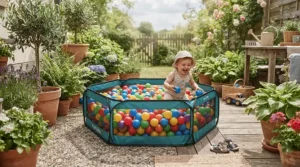
A ball pit pool for toddlers is a low-walled, cushioned play tub that holds plastic play balls, and in some designs a few centimetres of water. It is sized for children roughly aged one to three, with soft or inflatable sides that reduce bumps and a base that stays stable when a small body leans on it.
The idea has a long history. Wikipedia’s entry on ball pits describes them as padded boxes or pools filled with small hollow plastic balls, traditionally found in nurseries, arcades and fun centres. It notes that they’re generally considered safe for children who are at least around 10 months old and able to sit up and move independently. That last point matters. Head and neck control decide readiness more than a birthday does.
Home versions fall into three families: inflatable pool hybrids, foam or fabric pits, and tent-style pop-ups. Understanding which family you’re shopping in prevents the most common mistake, which is buying a foam pit and hoping to fill it with the hosepipe.
How to Choose a Ball Pit Pool for Toddlers
Here are seven steps, in order of importance.
- Decide wet, dry or both. If you want water, choose an inflatable or rigid-sidewall pool. If dry-only, foam or fabric is fine.
- Check the wall height. A wall around 20–30 cm suits early walkers, since low entry height reduces trips and tumbles.
- Judge soft-sided safety. Foam and inflatable rims cushion tumbles. Rigid rims hold shape but hit harder if a child falls onto them.
- Confirm the age label. Ages 1, 2 and 3 all appear on similar products, and labels can conflict between retailers, as with the Bestway Tunneltopia Ball Pit.
- Count the balls. Two hundred balls suits a 90 cm pit. Fifty in a similar space is only a thin layer.
- Think storage. Folding or deflating matters if you live in a flat.
- Look for a safety mark. Toys sold in Great Britain should carry UKCA or CE marking (more on that below).
Transformation Guide: Set Up and Maintain Your Pit in the First 30 Days
A good setup makes a mid-range product perform like a premium one.
Week one. Inflate until firm, not drum-tight. Over-inflating stresses seams, especially in the sun. Place the pool on a flat, clear surface with no sharp stones, and on a rug or mat if indoors. Add balls in layers and stop when the floor is covered several deep.
Water play. Keep the water shallow, only a few centimetres. Stay within arm’s reach. Empty the pool as soon as playtime ends.
Cleaning. Wash balls in warm soapy water, rinse and dry thoroughly before storing. Damp balls in a closed bag grow mould.
Common first-month mistakes:
- Leaving vinyl in strong sun for hours, which can warp seams.
- Forgetting a rainy-day refill (more on that in the safety section).
- Overfilling with balls until toddlers can’t move.
- Storing the pool damp.
A quick weekly wipe-down and a monthly ball wash keeps things fresh. Rotating a handful of balls in and out also keeps play interesting.
✨ Don’t Miss These Exclusive Deals!
🔍 Take your ball pit pool for toddlers plan to the next level with these carefully selected products. Click on any highlighted item to check current pricing and availability. These picks will help you create safe, giggle-filled play sessions your family will love!
Real-World Scenarios: Matching the Pit to Your Home
Scenario one: the flat with no garden. A two-year-old, a small living room, and a budget around £40. The Mineup Foldable Ball Pit fits under a bed when guests visit, and if the budget stretches, the GYMAX Kids Ball Pit delivers cushioned walls and included balls. Water play is off the table, so this family may also look at a splash mat elsewhere.
Scenario two: the small terrace with two toddlers. An eighteen-month-old and a three-year-old, a sunny south-facing patio and a £50 ceiling. The Bestway Canopy Play Pool offers shade, a soft floor and room for both, although the older child may outgrow it first. Both children need adult supervision at all times.
Scenario three: occasional grandparent visits. Space is limited and the toddler comes twice a week. The Bestway Up, In & Over Paddling Pool is cheap, light and quick to inflate, and it comes with balls already inside.
In each case the deciding factor is the same: the pit needs to be easy to set up, or it never gets used.
Ball Pit Pool vs Ball Pit Tent: Which Is Right for Your Toddler?
Ball pit pool vs ball pit tent is the debate that catches most first-time buyers. A pool-style pit has a base and walls and holds balls. A tent adds a canopy and sometimes tunnels. Pop-up tents fold fast, but their flimsy base and low walls can let balls spill out.
| Feature | Inflatable pool hybrid | Foam pit | Tent-style hybrid |
|---|---|---|---|
| Water-safe | Yes | No | No |
| Cushioned walls | Moderate | High | Moderate |
| Storage | Deflates | Bulky | Folds flat |
| Best For | Bestway Canopy Play Pool | GYMAX Kids Ball Pit | Bestway Tunneltopia Ball Pit |
The comparison shows that the Bestway Canopy Play Pool wins on year-round flexibility. The GYMAX Kids Ball Pit wins on comfort, and the Bestway Tunneltopia Ball Pit wins on imaginative play. If your toddler needs cushioned edges and a calm space, foam beats tents. If they love hiding, the tunnel wins.
Ball Pit Paddling Pool for Indoors: Can You Really Do It?
Yes, with conditions. A ball pit paddling pool for indoors usually means using an inflatable pool dry, filled with balls, on carpet or a rug. That is the safe, sensible route. Adding water indoors is possible but messy, so keep it to a few centimetres, lay towels down, and keep electrical items well clear.
The Bestway Up, In & Over Paddling Pool and the Bestway Canopy Play Pool are both marketed for indoor and outdoor use, but check the size against your room first. A 140 cm square pool swallows a small living room. Smaller circular options like the Bestway Up, In & Over Paddling Pool slip in easily.
Ball pit paddling pool for indoors success comes down to three habits: choose a non-slip surface, deflate when not in use, and never leave water standing. Vinyl on laminate slides around, so a rug underneath is worth the effort.
Indoor-Outdoor Flexibility: Getting Year-Round Value
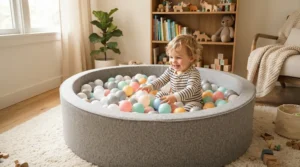
Indoor-outdoor flexibility is what turns a seasonal toy into a long-term one. The best design lets you run water play in July, balls in December, and store the whole thing flat in between.
Inflatables such as the Bestway Canopy Play Pool and the Intex Duckling Snapset Pool flex the most. They handle water and balls and can move outside or in. Foam options such as the DIVCHI Foam Ball Pit work well indoors and on dry patios, but they can’t handle water.
Think about how your year actually looks. A family in a flat with no outdoor space gets more value from a dry indoor design. A family with a garden should lean toward a pool hybrid. Indoor-outdoor flexibility also means the pit adapts as your child grows: at two it’s a ball pit, at four it’s a splash bowl, and at five it’s a den for stuffed animals.
Soft-Sided Safety: What Cushioned Walls Really Do
Soft-sided safety isn’t a marketing flourish. Toddlers fall, and the wall they fall against decides whether it’s a shrug or a shriek.
Foam walls, as on the GYMAX Kids Ball Pit, absorb impact and spring back. Inflatable walls, as on the Bestway Canopy Play Pool, cushion too, though they can shift under weight. Rigid walls, as on the Intex Duckling Snapset Pool, hold shape but offer less give. Weigh the trade-off: rigid walls are steadier for pulling up, softer walls are gentler for falling into.
What soft walls can’t do is prevent drowning. RoSPA’s safety advice for young children warns that a child can drown in just a few centimetres of water in a minute. Soft-sided safety and supervision work together. Neither replaces the other.
Low Entry Height: The Underrated Feature
Low entry height is the spec parents miss until the first tumble. A toddler who can step into a pool unaided is more independent, and more importantly, less likely to launch themselves over a high wall head-first.
The Intex Duckling Snapset Pool at around 25 cm and the Bestway Up, In & Over Paddling Pool at around 20 cm both offer modest walls. Taller options like the Bestway Tunneltopia Ball Pit at 70 cm cater to older toddlers who want a den feel, but a younger child will need a lift in.
There’s a balance. Too low and balls escape. Too high and small legs struggle. As a rule of thumb, aim for a wall that sits at about knee height for your child. Low entry height also helps adults, because you can lift a child in and out without straining your back.
Safety, Supervision and UK Toy Rules
Water safety comes first. RoSPA’s garden safety guidance notes that young children can drown in very small amounts of water and that rain can refill paddling pools, so put them away after use. Empty the pool the moment playtime ends, and never leave a toddler unsupervised.
On product rules, toys sold in Great Britain fall under the Toys (Safety) Regulations 2011. GOV.UK’s guidance on UKCA and CE marking confirms that businesses can use either UKCA or CE marking for goods placed on the GB market. In practice, look for one of those marks on the packaging or listing. If a seller can’t show one, treat that as a warning sign.
Finally, read the age label. Some listings state 2+ while others warn against use under 3. The label reflects small-parts and drowning risk, so follow the stricter reading for your own child.
Long-Term Cost and Maintenance: What You’ll Really Spend
The sticker price only tells part of the story. Extra balls, a pump, and a replacement pool after two summers all add up.
| Scenario | Assumed spend | Assumed sessions | Cost per session |
|---|---|---|---|
| Bestway Up, In & Over Paddling Pool | £20 + £10 balls | 60 | Around 50p |
| Bestway Canopy Play Pool | £45 | 90 | Around 50p |
| GYMAX Kids Ball Pit | £55 | 150 | Around 37p |
| Best For | GYMAX Kids Ball Pit for daily indoor use |
These figures are illustrative assumptions, not measured results. The pattern still holds: a pricier product used often beats a cheap one used rarely. The GYMAX Kids Ball Pit wins on cost per session if it gets daily use, while the Bestway Canopy Play Pool wins if summer is your main season.
Maintenance is minimal. Keep a repair patch handy for inflatables, wash balls monthly, and store everything dry. Vinyl pools typically last a couple of seasons with good care.
FAQ
❓ How many balls do I need for a ball pit pool for toddlers?
❓ Can a ball pit paddling pool for indoors go on carpet?
❓ At what age can toddlers use a ball pit?
❓ How do I clean plastic balls safely?
❓ Can I leave a paddling pool out overnight?
Conclusion
The best ball pit pool for toddlers depends on your home, not the marketing. For a sunny garden and a mix of water and balls, the Bestway Canopy Play Pool offers the most versatility. For the lowest-risk trial, the Bestway Up, In & Over Paddling Pool gets you started for very little. For wobbly walkers, the Intex Duckling Snapset Pool brings a friendly low entry height. For imaginative crawlers, the Bestway Tunneltopia Ball Pit adds a tunnel. For cushioned indoor play, the GYMAX Kids Ball Pit and DIVCHI Foam Ball Pit lead the way, and the Mineup Foldable Ball Pit wins for flats.
Keep three rules in mind: match wet or dry to your space, prioritise soft-sided safety and low entry height, and never leave a toddler unsupervised near water, however shallow. Do that and any of these seven will deliver years of giggles.
✨ Ready to build your toddler’s play corner? 🛒 Click any highlighted product above to check current pricing and availability, and let the ball-pit adventures begin! 🎈
Recommended for You
- Ball Pit Pool: 7 Best Picks For UK Gardens (2026)
- Baby Pools With Canopy: 7 Brilliant UK Picks (2026)
- Baby Pool With Canopy for Newborns: 7 Best UK Picks (2026)
Disclaimer: This article contains affiliate links. As an Amazon Associate, I earn from qualifying purchases. If you purchase products through these links, we may earn a small commission at no additional cost to you.
✨ Found this helpful? Share it with your friends! 💬🤗
