In This Article
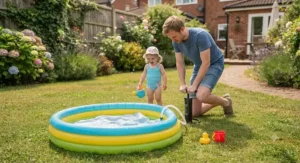
Somewhere between the third heatwave warning on the radio and your toddler’s fourth attempt to climb into the washing-up bowl, you’ll have the same thought every British parent has had since paddling pools were invented: right, that’s it, we need one of our own. A paddling pool for 2 year old use is, in the simplest possible terms, a small, shallow inflatable or rigid-sided pool designed specifically for very young children — shallower, softer-sided and smaller than a family pool, built so a toddler can stand, sit and splash safely under close supervision. It sounds like a simple purchase. It absolutely is not, once you start scrolling through forty near-identical listings at 11pm.
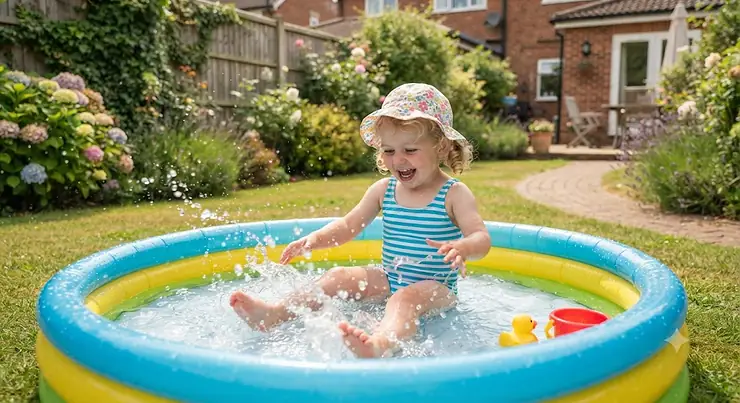
Two-year-olds are a peculiar breed of customer. They want to be in the water, on the water, occasionally attempting to eat the water, and they have zero concept of “stay in the shallow bit.” That means the paddling pool for 2 year old shoppers actually need has to tick boxes that adult swimming pools never worry about: a soft floor for wobbly first steps, sides low enough to climb over unaided (so nobody gets trapped), and genuinely limited water depth. This guide pulls together real products currently sold in the UK, real aggregated review sentiment from parenting communities, and honest analysis of who each one actually suits — no invented five-star raves, just what the research actually shows.
We’ve researched budget inflatables, shaded activity pools and sturdier framed options so you don’t have to trawl Amazon at midnight. By the end, you’ll know exactly which type of pool fits your garden, your toddler’s temperament and your patience for re-inflating vinyl in a heatwave.
Quick Comparison Table
Before the deep dive, here’s the shortcut version — useful if you’ve got three minutes and a toddler currently emptying the biscuit tin onto the kitchen floor.
| Pool | Best For | Price Range | Standing Depth |
|---|---|---|---|
| Intex Mushroom Baby Pool | Smallest budgets, ages 1-3 | Under £20 | Very shallow (~13cm) |
| Bestway Sweet Shop Paddling Pool | Everyday budget shaded play | £20-£35 | Shallow |
| Splosh Sun Shade Canopy Pool | More room, still shaded | £30-£45 | Shallow-medium |
| Splosh Sealife Activity Pool | Active toddlers who want a slide | £35-£55 | Shallow-medium |
| Benross Sun Club Family Pool | Growing families, short-term use | £25-£40 | Medium (fill low for 2yo) |
| Intex Dinoland Play Centre | Longer play sessions, siblings | £70-£110 | Medium (fill low for 2yo) |
| Bestway Steel Pro Frame Pool | Investment piece, lasts years | £120-£180 | Medium-deep (fill low for 2yo) |
What jumps out here is the split between “toddler-first” pools and “grows-with-the-family” pools. The Intex Mushroom Baby Pool and Bestway Sweet Shop Paddling Pool are genuinely built around a two-year-old’s proportions, while the Intex Dinoland Play Centre and Bestway Steel Pro Frame Pool are bigger investments that need you to actively manage the water level to keep them toddler-appropriate. Neither approach is wrong, but they solve different problems: one is about getting a safe first pool cheaply, the other is about buying something that’ll still be earning its keep when your toddler turns five.
💬 Just one click — help other parents make a safer, easier choice too!😊
Top 7 Paddling Pools for a 2 Year Old: Expert Analysis
Here’s the full rundown — seven real, currently-available UK pools spanning cheap-and-cheerful to genuine long-term garden investments.
1. Intex Mushroom Baby Pool — smallest footprint, built-in shade
The Intex Mushroom Baby Pool solves a problem most family-sized pools create: it’s actually sized for a toddler, not scaled down from an adult pool as an afterthought. At roughly 1.02m x 0.89m inflated, with a wall height that holds around 13cm of water, this is about as low-risk as paddling pools get — shallow enough that even a confident two-year-old can’t submerge past their knees. The mushroom-shaped canopy overhead isn’t full shade (it moves with the sun, so don’t rely on it alone), but it takes the edge off midday glare while your toddler potters about. Based on the spec comparison, this is the pool for parents who want the cheapest possible entry point into garden water play without compromising on the depth question that matters most for this age group.
Aggregated review sentiment from parenting sites is consistently warm: reviewers on Mumsnet describe it as “a brilliant solution” for short, supervised sessions, while parent reviews cited by Mother & Baby call it “perfect size” for babies under one and toddlers alike. The recurring caveat, though, is longevity — most reviewers agree it’s realistically a one, maybe two-summer product before your toddler outgrows it physically.
Pros:
- ✅ Genuinely toddler-proportioned, not a shrunk family pool
- ✅ Very shallow water level reduces depth-related worry
- ✅ Cheapest realistic entry point into garden water play
Cons:
- ❌ Canopy shade is partial, not full sun protection
- ❌ Toddler will likely outgrow it within a summer or two
At under £20, this sits firmly in “why wouldn’t you” territory for a first pool — the value proposition only weakens if your garden gets baked sun all afternoon, in which case you’ll want separate shade regardless.
2. Bestway Sweet Shop Paddling Pool — best everyday budget shaded pick
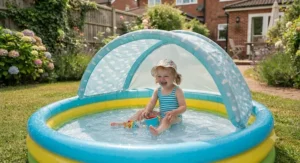
Sitting a notch above the Mushroom pool in size and structure, the Bestway Sweet Shop Paddling Pool is designed explicitly for the 2+ age bracket and includes a built-in canopy shade — a detail that matters more than it sounds, since UK sun can be surprisingly harsh even on an overcast afternoon. What most buyers overlook about canopy pools at this price point is that the shade rarely covers the whole pool at once; you’re buying “some” relief, not a parasol substitute, so pairing it with a sunhat and shade-friendly garden spot is still sensible.
The wider base than a pure baby pool gives a two-year-old room to crawl, sit and splash without constantly bumping the sides, which matters once they’re past the newborn-pool stage and want to actually move around. Reviewers on Amazon’s bestseller listings consistently flag easy inflation and quick setup as strengths — genuinely useful on a spontaneous hot afternoon when nobody wants to be wrestling with a foot pump for twenty minutes.
Pros:
- ✅ Built-in canopy shade included as standard
- ✅ More room to move than compact baby pools
- ✅ Fast inflation, minimal setup faff
Cons:
- ❌ Shade coverage is partial, not complete
- ❌ Vinyl thickness typical of budget tier, less puncture-resistant
Priced in the £20-£35 range, it’s a sensible middle-ground buy for families who want a bit more play space than the smallest baby pools offer, without stepping up to the bigger investment pools further down this list.
3. Splosh Sun Shade Canopy Pool — best for more room under cover
The Splosh Sun Shade Canopy Pool is a 1.43m x 1.43m square inflatable with an overhead canopy, and the square footprint is the standout feature here — it gives a toddler noticeably more space to crawl, splash and share with a sibling than the round baby pools further up this list. Here’s what to weigh: more surface area means more water to heat up in the sun (nice for comfort, less nice for keeping it genuinely cool on a scorching day), so plan on refilling or topping up more than you would with a compact pool.
The canopy sits above rather than to one side, which — based on the spec comparison with shade-to-the-side designs — tends to give more consistent coverage as the sun moves across the sky, rather than leaving one half of the pool exposed by mid-afternoon. This is a genuinely useful design detail for parents trying to avoid the sunscreen-reapplication treadmill.
Pros:
- ✅ Square shape gives more usable play space
- ✅ Overhead canopy shades more consistently through the day
- ✅ Suits two toddlers or a toddler plus older sibling
Cons:
- ❌ Larger surface area means more water to manage and refill
- ❌ Takes up more garden real estate than compact pools
At £30-£45, this is a solid mid-range pick for gardens with the space to spare and families who’d rather buy shade built-in than juggle a separate parasol.
4. Splosh Sealife Activity Paddling Pool — best for play value and a slide
If your toddler is the sort who needs something to do rather than just sit in water, the Splosh Sealife Activity Paddling Pool earns its place with a genuinely useful spec: a maximum pool depth of just 18cm, explicitly listed by the manufacturer, alongside a small slide and bundled inflatable games. That depth figure matters — it’s one of the few listings that states the maximum fill level plainly rather than leaving you to guess from wall height alone, which is exactly the kind of detail parents searching for a paddling pool for 2 year old use should be hunting for.
The included slide adds a layer of gross motor challenge that flat pools don’t offer — climbing, balancing and sliding are all in play, which reviewers on parenting forums note keeps toddlers engaged for noticeably longer stretches than a plain splash pool. The trade-off, honestly assessed, is that a slide means more moving parts and more inflation seams, which slightly raises the chance of a slow puncture over a season of daily use.
Pros:
- ✅ Explicit 18cm depth limit stated by the manufacturer
- ✅ Slide adds genuine play and motor-skill value
- ✅ Bundled inflatable games extend session length
Cons:
- ❌ More seams and moving parts than a simple flat pool
- ❌ Officially aimed at 2-5s, so best for slightly steadier walkers
Expect to pay in the £35-£55 range — reasonable for the added play value, particularly if your toddler tends to lose interest in “just paddling” within ten minutes.
5. Benross Sun Club Family Pool — best if you want room to grow into
The Benross Sun Club Family Pool is a 200 x 150 x 50cm rectangular inflatable officially listed for ages 6 and up at full capacity — which means, for a two-year-old, the honest answer is that you buy this for the shape and space, then manage the water level yourself. Filled only a few centimetres deep and closely supervised, the generous rectangular footprint gives a toddler plenty of room to crawl and splash without the sides closing in, and it’ll still be an appropriately sized pool in a few years’ time without needing to be replaced.
What the spec sheet won’t tell you, but the logic of the three-ring inflatable design suggests, is that a bigger volume of water takes longer to warm in the sun — so expect a slightly cooler paddle on cloudier days compared with the smaller baby pools. Reviewers of similarly specced Benross rectangular pools tend to flag easy inflation and decent vinyl thickness for the price as consistent strengths.
Pros:
- ✅ Generous footprint that outlasts the toddler years
- ✅ Reasonably priced for the volume of pool you get
- ✅ Simple three-ring inflatable design, easy to store
Cons:
- ❌ Officially rated for older children, so depth needs active management
- ❌ Larger volume takes longer to warm on cooler days
At £25-£40, it’s a value pick specifically for parents thinking beyond this single summer — just commit to the shallow-fill discipline every single time.
6. Intex Dinoland Kids Inflatable Water Play Centre — best for longer sessions and siblings
Stepping up to genuine “activity centre” territory, the Intex Dinoland Kids Inflatable Water Play Centre measures roughly 333 x 229 x 112cm and packs in a slide, a dinosaur-themed sprayer and a ball-pit style base alongside the wading pool itself. This is the pool that turns a ten-minute paddle into a forty-minute event, because there’s simply more happening — sliding, spraying, splashing and ball play all in one structure. Based on the spec comparison with simpler flat pools, the trade-off for that extra engagement is size and complexity: more inflation chambers, more storage space required, and a genuinely bigger commitment to set up and pack away.
For a two-year-old specifically, the sensible approach is to treat the wading section as the only wet zone and keep the fill shallow, using the slide and sprayer dry or lightly damp rather than filling the whole structure to its rated capacity. Reviewers commonly describe it as excellent value for siblings of mixed ages sharing one pool, since the varied zones give an older child something to do while a toddler paddles safely at the shallow end.
Pros:
- ✅ Multiple play zones extend engagement well beyond simple paddling
- ✅ Works well across a spread of sibling ages
- ✅ Genuine “destination” pool for a garden that gets heavy summer use
Cons:
- ❌ Larger and more complex to inflate, fill and store
- ❌ Requires active water-level management for a two-year-old specifically
Priced at roughly £70-£110, this is a premium purchase best suited to gardens hosting regular multi-child play dates rather than solo toddler sessions.
7. Bestway Steel Pro Frame Pool — best long-term investment piece
The Bestway Steel Pro Frame Pool is the pool equivalent of buying a proper pram instead of a cheap buggy: a 9ft rigid-framed pool holding around 3,300 litres, with tool-free assembly and a drainage plug, officially rated for ages 3 and up with supervision. For a two-year-old, that official age guidance matters — this isn’t a toddler-first product, and the honest approach is either to wait a year, or to fill it only a few centimetres deep and supervise closely if you’re using it early, treating the full depth as something to grow into rather than use immediately.
Mumsnet reviewers rate this as their overall top pick specifically because framed pools hold their shape better than pure inflatables and survive a full season propped up in the garden rather than needing daily re-inflation — a genuinely different maintenance experience from every other pool on this list. What most buyers overlook is that a frame pool this size effectively asks for a repair kit, pool cover and possibly a chlorine dispenser as sensible add-ons if you want to leave it standing for the whole summer rather than draining it after every use.
Pros:
- ✅ Rigid frame holds shape far better than inflatables
- ✅ Large capacity means it suits the whole family for years
- ✅ Repair kit included, genuinely built for a full season
Cons:
- ❌ Officially rated 3+, so needs careful management for a two-year-old
- ❌ Highest price point and the biggest space commitment
At £120-£180, this is squarely an investment buy — the right call if you’re already thinking about years three, four and five rather than just this one summer.
Top 7 Products at a Glance
| Product | Type | Age Guidance | Best For |
|---|---|---|---|
| Intex Mushroom Baby Pool | Compact shaded baby pool | 1-3 years | Cheapest safe first pool |
| Bestway Sweet Shop Paddling Pool | Budget canopy pool | 2+ years | Everyday shaded play |
| Splosh Sun Shade Canopy Pool | Square canopy pool | Toddler/preschool | Extra room, shared play |
| Splosh Sealife Activity Pool | Activity pool with slide | 2-5 years | Toddlers who need entertaining |
| Benross Sun Club Family Pool | Rectangular family pool | 6+ (manage fill for 2yo) | Growing into over time |
| Intex Dinoland Play Centre | Multi-zone activity centre | General kids (manage fill for 2yo) | Siblings, longer sessions |
| Bestway Steel Pro Frame Pool | Rigid frame pool | 3+ with supervision | Long-term family investment |
Looking at the table above, the clearest split is age-appropriateness versus longevity: the Intex Mushroom Baby Pool and Bestway Sweet Shop Paddling Pool are built for right now, while the Benross Sun Club Family Pool, Intex Dinoland Play Centre and Bestway Steel Pro Frame Pool ask you to actively manage water depth in exchange for a pool that’ll still be useful in two or three years. Budget-conscious parents buying purely for this summer should lean toward the first two; families expecting several summers of use may find the extra outlay on a bigger pool pays for itself.
Toddler Paddling Pool vs Baby Pool: What’s Actually Different
The terms get used almost interchangeably online, but toddler paddling pool vs baby pool is a genuinely useful distinction once you understand what each is optimised for. A baby pool — think the Intex Mushroom Baby Pool — is built around a child who’s mostly sitting rather than standing: very shallow, small footprint, soft inflatable floor, designed for supervised sessions where the child stays largely in one spot. A toddler paddling pool, by contrast, assumes a child who’s walking, crouching, climbing in and out and wanting to move — which is why products like the Splosh Sealife Activity Paddling Pool add slides and activity features that a baby pool never would.
The practical upshot for a two-year-old, who typically sits somewhere between these two categories developmentally, is that the “right” choice depends more on your individual child’s mobility than their exact age in months. A cautious, less mobile two-year-old may still be perfectly happy in a baby-style pool. A confident climber who wants to be in and out constantly will get more from a toddler-style pool with a bit more room and a soft but sturdy structure to grip.
| Feature | Baby Pool | Toddler Paddling Pool |
|---|---|---|
| Typical depth | Very shallow (10-15cm) | Shallow-medium (15-20cm+) |
| Footprint | Compact, single-child | Larger, room to move |
| Extra features | Minimal, sometimes a canopy | Slides, sprayers, activity zones |
| Best For | Sitters, less mobile toddlers | Confident walkers and climbers |
The table makes the trade-off obvious: baby pools win on simplicity and low risk, while toddler paddling pools win on engagement and room to grow. Reviewers consistently note that the biggest regret isn’t buying the “wrong” category outright, but under-buying on space for a toddler who turns out to be far more active than expected.
💬 Just one click — help other parents make a safer, easier choice too!😊
How to Choose a Paddling Pool for a 2 Year Old
Cutting through the marketing noise, here’s the actual decision-making process worth following.
- Check the maximum fill depth first, not the wall height. Wall height and safe water depth aren’t the same thing — always check what the listing actually recommends filling to.
- Match the pool to your toddler’s mobility, not just their age. A cautious sitter and a confident climber need genuinely different pool types, even at the same age.
- Prioritise shade if your garden gets direct midday sun. A canopy reduces (but never replaces) sunscreen and shade breaks.
- Think about storage and daily emptying before you buy. RoSPA guidance is clear that pools should be emptied after every use, so factor in how easily yours drains and folds away.
- Decide if you’re buying for one summer or several. Bigger, pricier pools like the Bestway Steel Pro Frame Pool only make financial sense if you expect years of use.
- Read real reviews for puncture and seam complaints. Inflatable pools live and die by their seams — this is where genuine review sentiment beats marketing copy every time.
- Budget for extras. A repair patch kit, a groundsheet to protect the base, and sun shade for yourself are all worth adding to the total spend.
Standing Depth and Water Level: Getting It Right
Standing depth is arguably the single most important spec on any paddling pool listing, and it’s frustratingly the one most brands bury or omit. For a two-year-old, the practical guidance from parenting communities and safety bodies converges on the same point: water should sit low enough that your toddler could, in theory, sit down fully and still have their head clear of the surface — which in practice usually means somewhere in the 10-20cm range, regardless of what the pool’s total wall height allows.
Here’s what most buyers overlook: a pool’s maximum wall height is a manufacturing spec, not a safety recommendation. The Splosh Sealife Activity Paddling Pool‘s explicitly stated 18cm maximum depth is unusually transparent in this respect — most listings simply give you the inflated dimensions and expect you to work out a sensible fill level yourself. As RoSPA’s guidance bluntly puts it, young children can drown in very small amounts of water, so the “how deep is safe” question always has the same answer: shallower than you think, and never left unsupervised regardless of depth.
For the larger pools on this list — the Benross Sun Club Family Pool, Intex Dinoland Play Centre and Bestway Steel Pro Frame Pool — this means actively under-filling them relative to their rated capacity whenever a two-year-old is using them, rather than assuming the manufacturer’s age guidance already accounts for your specific toddler.
Practical Usage Guide: Setting Up Safe Garden Play Sessions
Getting genuinely good garden play sessions out of a paddling pool is less about the pool itself and more about the routine around it. Set-up matters: a flat, debris-free patch of lawn or a groundsheet underneath protects the pool’s base from punctures caused by twigs or stones, and it’s worth doing this check every single time rather than assuming yesterday’s spot is still clear.
Fill to your chosen safe depth using a hose rather than repeated bucket trips (your back will thank you), and let the water sit for a few minutes in the sun before your toddler gets in — mains water straight from the tap can be genuinely cold even in a heatwave. Sun protection deserves its own moment of planning: the NHS recommends sunscreen of at least SPF30 with UVA protection, reapplied regularly, since even “waterproof” formulas are reduced by towel-drying after time in the pool. Set a phone timer for reapplication every couple of hours rather than relying on memory during a distracting afternoon.
Common first-30-days mistakes are wonderfully predictable: overfilling because “a bit more water means longer play,” leaving the pool up (and full) overnight where it can silently refill with rainwater, and skipping the empty-and-dry routine that keeps vinyl seams from developing mould. Building the empty-after-use habit from day one, as RoSPA’s garden safety guidance recommends, saves both a hygiene headache and a genuine safety risk from an unsupervised, rain-refilled pool days later.
Real-World Scenarios: Matching the Pool to Your Toddler and Garden
The cautious first-timer: an 18-month to 2-year-old who’s never really been in open water before, in a small courtyard garden. The Intex Mushroom Baby Pool suits this scenario well — its tiny footprint and very shallow fill make the first few sessions low-stress for both toddler and parent, and the low price means you’re not gambling much if your toddler simply isn’t interested yet.
The confident splasher with a sibling: a two-year-old with a four or five-year-old sibling, decent-sized lawn, regular hot-weather use expected. Here the Splosh Sealife Activity Paddling Pool or the Intex Dinoland Play Centre make more sense — both offer enough play variety to hold an older child’s attention while the toddler paddles at the shallow end, provided depth stays managed throughout.
The family planning ahead: parents who know they’ll want a paddling pool every summer for the next three or four years and have the garden space to spare. The Bestway Steel Pro Frame Pool or Benross Sun Club Family Pool represent better long-term value here, even though both need careful shallow-filling right now — the maths works out better across several summers than repeatedly replacing cheaper inflatables.
Problem → Solution: Common Paddling Pool Headaches Solved
Problem: the pool keeps deflating overnight. Solution: check seams for slow leaks with a soapy water test before assuming it’s simply losing air through the valve; most repair kits (like the one bundled with the Bestway Steel Pro Frame Pool) fix small punctures in minutes.
Problem: my toddler won’t get in the water. Solution: start with an almost-empty pool and let them explore dry first, gradually adding a few centimetres at a time — pools like the Intex Mushroom Baby Pool, with their tiny scale, are far less intimidating for a nervous first-timer.
Problem: the pool gets too hot in direct sun by afternoon. Solution: fill later in the day, add ice cubes in hot weather, or prioritise a canopy pool like the Splosh Sun Shade Canopy Pool from the outset.
Problem: standing water attracts rain overnight. Solution: always drain fully after use rather than covering and leaving it — RoSPA specifically flags rain-refilled paddling pools as an under-recognised drowning risk.
Problem: grass underneath goes yellow and boggy. Solution: rotate the pool’s position every few days, or use a breathable groundsheet rather than solid plastic sheeting underneath.
Developmental Play: Why Water Play Matters for a 2 Year Old
It’s tempting to treat a paddling pool purely as a cooling-off tool, but developmental play is arguably the bigger win hiding inside every splash session. Pouring water between containers, squeezing a soaked sponge, and simply feeling the resistance of water against small hands all build fine motor control and hand-eye coordination — skills that transfer directly into everyday tasks like feeding themselves and, eventually, holding a pencil. The NHS’s baby and toddler play guidance specifically highlights water play as a valuable, low-cost way to support this kind of early physical development.
Beyond motor skills, water play is a genuinely rich language opportunity — narrating “pour,” “splash,” “empty,” “full” and “cold” while your toddler plays builds vocabulary in a context they’re actively engaged with, which tends to stick better than flashcard-style learning. Products with an activity element, like the slide on the Splosh Sealife Activity Paddling Pool, add a further layer of gross motor challenge — climbing and balancing on a wet, slightly unstable surface is a genuinely different physical skill from simply standing in flat water.
For parents weighing up whether a pricier activity pool is “worth it” over a simple flat one, this is the honest answer: the extra features aren’t just fun add-ons, they’re doing measurable developmental work, provided supervision stays constant throughout.
Common Mistakes When Buying a Paddling Pool for a Toddler
The most frequent misstep, based on recurring review themes, is buying purely on price without checking the stated depth or age guidance — leading to a pool that’s either too deep to feel comfortable filling shallow, or so small it’s outgrown within weeks. A close second is ignoring shade entirely and assuming a hat will do the job; reviewers of shade-free pools consistently mention parents ending up holding a parasol one-handed while supervising with the other.
Underestimating storage space is another common regret, particularly with larger options like the Intex Dinoland Play Centre, which takes noticeably more shed or loft space deflated than a simple flat pool. Finally, plenty of buyers skip checking for a repair kit or patch compatibility — a small oversight until the first slow puncture appears three weeks into the summer holidays.
Safety, Regulations and Supervision: What UK Parents Need to Know
There’s no way to write honestly about paddling pools without foregrounding safety, because the data genuinely demands it. RoSPA’s garden safety guidance is direct on this point: young children can drown in very small amounts of water, and paddling pools should always be covered or, more practically, emptied after use rather than left to potentially refill with rainfall overnight.
The core supervision rule doesn’t change regardless of which pool you buy: constant, close adult attention whenever water is present, with no reliance on inflatable toys, armbands or a sibling “keeping an eye” as a substitute. This applies just as much to the shallow Intex Mushroom Baby Pool as to the much larger Bestway Steel Pro Frame Pool — depth reduces risk, it doesn’t remove it. Alongside drowning prevention, sun safety deserves equal weight: reapplying SPF30+ sunscreen regularly and timing sessions to avoid the strongest midday sun between 11am and 3pm are both simple habits that meaningfully reduce risk over a full summer of garden play.
Long-Term Cost and Maintenance
Thinking in terms of total cost of ownership changes the value picture considerably. A £15 baby pool bought fresh every summer for three years costs roughly the same as one mid-range canopy pool bought once — but the mid-range option saves you the annual re-shopping hassle and generally holds up better to daily inflation and deflation. Framed pools like the Bestway Steel Pro Frame Pool sit at the other extreme: a higher upfront cost, but genuinely multi-year use if stored and maintained properly, plus lower ongoing “faff” since they don’t need daily re-inflating.
| Approach | Typical Annual Cost | Maintenance Effort | Best For |
|---|---|---|---|
| Replace budget pool yearly | Similar to one mid-range pool over 3 years | Low effort, low durability | Uncertain how much use it’ll get |
| One mid-range canopy pool | Lower cost spread over 2-3 summers | Moderate, some repairs likely | Confirmed regular summer users |
| Bestway Steel Pro Frame Pool | Highest upfront, lowest per-summer over years | Higher initial setup, low daily faff | Committed multi-year garden use |
Reading the table, the sweet spot for most families sits in the middle: a decent mid-range canopy or activity pool amortises well across a couple of summers without the storage and setup commitment of a full frame pool.
✨ Don’t Miss These Exclusive Deals!
🔍 Take your toddler’s garden play to the next level with these carefully selected pools. Click on any highlighted product to check current pricing and availability — these picks will help you create safe, splash-filled memories your family will love this summer!
Features That Actually Matter (And Those That Don’t)
Cutting through marketing copy: stated maximum depth matters enormously; the exact litre capacity, less so, since you’ll rarely fill to the brim regardless. A soft inflatable floor genuinely matters for wobbly toddlers taking their first unsteady steps on a slippery surface — it’s not just marketing fluff. A drainage plug (present on the Bestway Steel Pro Frame Pool) is a real time-saver versus tipping a pool over by hand, particularly once it’s holding hundreds of litres.
On the “doesn’t matter as much as it sounds” side: elaborate print themes and character licensing rarely affect actual play value, and higher litre capacities on family-sized pools are often more relevant to older siblings than to the two-year-old you’re actually buying for.
Inflatable Toddler Pool Review Roundup: What Real Parents Say
Rather than inventing sentiment, here’s what genuinely recurs across parenting review sites when it comes to inflatable toddler pool review discussions. Shade is consistently the most-praised feature across canopy pools — parents repeatedly note it as the difference between a pool that gets used daily and one that gets abandoned after the first sunburn scare. Ease of inflation and setup speed come up almost as often, particularly from parents managing a genuinely impatient toddler who wants to be in the water now.
On the critical side, slow punctures and seam failures are the most repeated complaint across budget inflatables generally, which is exactly why a repair kit and a careful check of the ground underneath matter more than they might seem to at first glance. MadeForMums’ tested roundup echoes this pattern, consistently flagging assembly ease, play value and shade as the deciding factors between similarly priced options — useful confirmation that these aren’t just isolated opinions.
FAQ
❓ What is the safest depth for a paddling pool for a 2 year old?
❓ How long can a 2 year old safely stay in a paddling pool?
❓ Should I buy a shaded or unshaded paddling pool?
❓ Do inflatable paddling pools puncture easily?
❓ Can a 2 year old use a bigger family paddling pool?
Conclusion
There’s no single “best” paddling pool for 2 year old shoppers, because the right answer genuinely depends on your toddler’s mobility, your garden’s sun exposure, and whether you’re buying for one summer or several. The Intex Mushroom Baby Pool remains the sensible starting point for cautious first-timers and tight budgets, while the Splosh Sealife Activity Paddling Pool rewards families with more confident, entertainment-hungry toddlers. For those thinking several summers ahead, the Bestway Steel Pro Frame Pool or Benross Sun Club Family Pool offer genuine long-term value, provided you commit to managing water depth carefully in the early years.
What matters more than the specific product, though, is the routine around it: shallow, sensible fill levels, constant supervision without exception, regular sunscreen reapplication, and emptying the pool after every single use. Get those fundamentals right, and almost any of the seven pools covered here will deliver a genuinely joyful summer of garden splashing — the kind of ordinary, slightly soggy afternoon your toddler will (eventually) look back on fondly, even if they can’t remember it yet.
✨ Ready to make a splash this summer? Compare your favourite pick above and grab yours before the next heatwave hits! 💦
Recommended for You
- Toddler Paddling Pool: 7 Safest Picks for UK Gardens 2026
- Family Paddling Pool vs Kiddie Pool: 7 Honest Picks for 2026
- Family Paddling Pools: 7 Best Picks for a Cooler Garden in 2026
Disclaimer: This article contains affiliate links. As an Amazon Associate, I earn from qualifying purchases. If you purchase products through these links, we may earn a small commission at no additional cost to you.
✨ Found this helpful? Share it with your friends! 💬🤗
