
In This Article
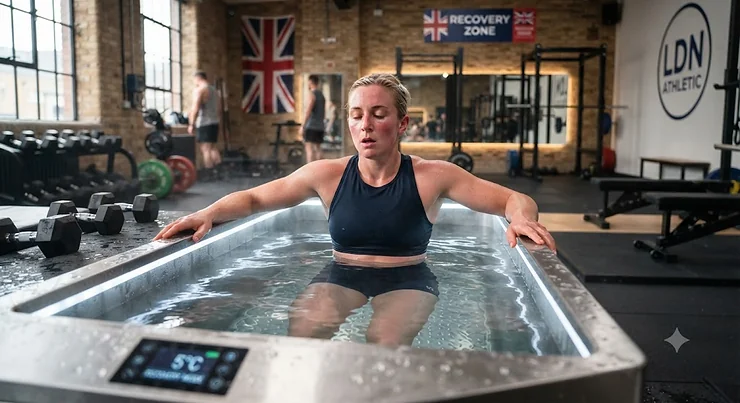
Somewhere between the Wim Hof documentaries and the gym-changing-room chat about “getting the ice bath delivered,” cold water therapy stopped being a fringe biohacker habit and turned into something your physio, your five-a-side captain, and possibly your nan are all discussing. A cold plunge pool for recovery is, in the simplest terms, a purpose-built tub or barrel that holds water at 10-15°C or colder, letting you submerge after exercise to reduce perceived soreness and calm an overworked nervous system. It’s not a hot tub’s moody cousin — it’s a completely different tool with a completely different job.
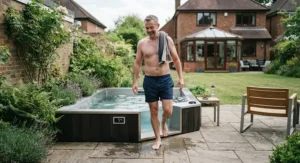
Here’s the thing nobody tells you before you start scrolling through listings: not every plunge pool is built the same, and the gap between a £70 inflatable ring and a £4,000 chilled unit is enormous. Some are genuinely brilliant for a beginner dipping a toe in (sometimes literally). Others are overkill unless you’re training like it’s your job. This guide walks through seven real products actually sold and shipped in the UK, what the spec sheets mean once you’re standing there shivering, and where the genuine evidence for muscle soreness relief actually stands — because, spoiler, it’s more nuanced than the Instagram reels suggest.
One safety note before we go further: cold water affects the body fast, and the RNLI’s guidance on cold water shock classes anything at 15°C and below as cold water, with effects on breathing and movement that are often underestimated. That’s a sea and river safety context rather than a back-garden tub, but the underlying physiology — the gasp reflex, the spike in heart rate — is exactly why you ease into a plunge pool rather than cannonball in. Keep that in mind as we go through the options.
Quick Comparison: Cold Plunge Pools at a Glance
| Product | Best For | Capacity | Chiller-Ready | Price Range |
|---|---|---|---|---|
| The Cold Pod | First-time buyers on a tight budget | 300-440L | No | Under £130 |
| CalmMax Oval Ice Bath Tub | Bigger frame, still budget | 492L | No | £150-£220 |
| LyfeFocus Cold Therapy Pod | Complete starter bundle | ~380L | No (ice-only) | £180-£260 |
| Arctic Performance 400L XL | Best insulation under £300 | 400L | Partial (drain ports) | £220-£300 |
| Nurecover Plunge + Chiller | Best value with a real chiller | 345L | Yes, included | £800-£1,000 range |
| Ice Barrel 500 | Small footprint, upright plunge | ~355L (94 gal) | Yes, ports built in | £1,200-£1,600 range |
| Renu Therapy Cold Stoic 2.0 | Daily use, luxury finish | Large | Yes, integrated Wi-Fi chiller | £4,000+ range |
Looking at the spread here, the jump isn’t really about “better plastic” as you go up the price ladder — it’s about whether you’re buying a bucket you fill with bagged ice every session, or a system that does the cooling for you on demand. The CalmMax Oval Ice Bath Tub and The Cold Pod sit in near-identical territory for anyone testing the waters (sorry), while the Nurecover Plunge + Chiller is the first genuine “set it and forget it” option most people can actually justify buying. If you’re a twice-a-week user, the middle of this table is probably your home; if you’re plunging daily and hate the idea of ever touching a bag of ice again, look to the bottom two rows.
💬 Found a tub that fits your routine already? Skip ahead — or keep reading, because the “Best For” column only tells half the story.
Top 7 Cold Plunge Pools for Recovery: Expert Analysis
1. The Cold Pod — cheapest genuine way to try cold therapy
The entry point into cold water recovery doesn’t get much lower than this, and that’s precisely the appeal. The Cold Pod is a PVC-and-pole inflatable-adjacent tub, built around a six-post frame with a thick pressure-resistant liner, and it folds down small enough to store in a cupboard between sessions.
Set-up takes minutes rather than hours, and the tub comes in two sizes — a compact 300L version and an XL 440L option for taller users — both fitted with a built-in tap for draining and a reflective zip-up cover to slow heat gain between plunges. Neither version includes any cooling hardware, so cold water and bagged ice are doing all the work here; expect to top up ice every one to two sessions in warmer months.
Based on the spec comparison with pricier rivals, this is squarely a “try before you commit thousands” product, and it’s honest about that. Reviewers consistently note it’s a sensible pick for beginners and for people managing conditions like Raynaud’s who want controlled, repeatable cold exposure without a big financial commitment, though a handful of longer-term owners flag that the PVC liner shows wear faster than rigid alternatives. If you’re not sure cold plunging is for you yet, this is where most people should actually start.
Pros:
- ✅ Genuinely low buy-in cost for testing cold therapy
- ✅ Folds flat for storage between sessions
- ✅ Insulated cover slows ice melt reasonably well
Cons:
- ❌ No chiller compatibility — ice-only cooling
- ❌ PVC liner won’t last as long as rigid tubs
Price sits comfortably under £130 depending on size, and at that price the value verdict is simple: it’s the cheapest legitimate entry point into the category, not a long-term forever-tub.

2. CalmMax Oval Ice Bath Tub — biggest capacity for the money
Where The Cold Pod wins on price, the CalmMax Oval Ice Bath Tub wins on room to move. At 492 litres and roughly 105cm in length, this oval-shaped tub is built with a five-layer insulated wall and comes with its own lid, giving taller or broader-framed users far more room to actually stretch out rather than crouch.
The five-layer construction (a PVC inner skin, a foam insulating core, and a tougher outer shell) means it holds temperature noticeably longer than single-layer inflatables — practically, that translates to less ice needed per session once the initial chill is set. There’s no chiller port here, so this is still a manual, ice-topped-up system, but the oversized shape means one bag of ice goes further per litre than in a tighter tub.
What most buyers overlook about oval-shaped tubs like this one is that the extra surface area actually works against you slightly on heat retention compared with a deep, narrow barrel — you’re trading thermal efficiency for comfort. That’s a reasonable trade for most home users, and it’s why the CalmMax Oval Ice Bath Tub tends to appeal to people who found smaller tubs claustrophobic. Aggregated review sentiment on this style of tub is generally positive on comfort and setup speed, with the main recurring criticism being that oval tubs need more ice per fill than upright barrels of similar volume.
Pros:
- ✅ Largest capacity in the budget bracket
- ✅ Five-layer insulation slows temperature loss
- ✅ Oval shape allows a comfortable semi-lying position
Cons:
- ❌ Needs more ice per session than upright designs
- ❌ No lid-mounted temperature display
Typically priced in the £150-£220 range, this is strong value if space and comfort matter more to you than raw thermal efficiency.
3. LyfeFocus Cold Therapy Pod — best all-in-one starter bundle
Buying your first cold plunge pool inevitably means also buying a thermometer, a foot mat, a groundsheet, and probably some reusable ice blocks separately — unless you go with something like the LyfeFocus Cold Therapy Pod, which bundles all of that in from the start.
The pod itself uses the same five-layer insulated build you’ll see across most mid-range tubs, but the accessory kit is what earns this its spot here: a floating thermometer takes the guesswork out of hitting your target temperature, a foot mat protects the base from grit, and reusable ice blocks mean you’re not restocking bagged ice from the supermarket every week. On paper this means a lower total first-year cost than it initially looks, since you’re not buying those extras piecemeal afterwards.
Honest take: this is a strong pick for someone who wants a “complete kit, no extra shopping trips” experience rather than the absolute cheapest tub on the market. Reviewers who’ve compared bundled kits like this against bare tubs consistently report that the included groundsheet and foot mat genuinely reduce the faff of outdoor set-up, which matters more than it sounds once you’re doing this at 6am in December.
Pros:
- ✅ Comes with thermometer, mat and reusable ice blocks
- ✅ Lower total accessory spend than buying separately
- ✅ Five-layer insulation matches pricier bare tubs
Cons:
- ❌ Still manual, ice-based cooling only
- ❌ Bundle pushes price above bare-tub competitors
Expect to pay in the £180-£260 range for the full kit — a fair value verdict if you’d otherwise be buying the accessories separately anyway.
4. Arctic Performance 400L XL — best insulation before you hit four figures
Stepping up again, the Arctic Performance 400L XL is aimed squarely at people who plunge often enough that ice cost and melt speed genuinely matter to their monthly budget. It uses a five-layer insulated shell rated to hold cold water for extended periods, paired with a built-in Thermo-Tech thermometer so you’re not guessing whether you’ve hit your target range.
The XL capacity and drain-friendly base put this a rung above entry tubs in usability — the drain and hose setup means changing water is a five-minute job rather than a bucket-brigade exercise, and the reinforced base copes better with repeated ice loading than thinner budget liners. Based on the spec comparison with the two products above, the insulation-to-price ratio here is genuinely the strongest in the sub-£300 bracket, though you’re still filling with bagged ice — there’s no dedicated chiller port on this specific model.
What the spec sheet won’t tell you, but user reports suggest, is that the black exterior absorbs more heat in direct summer sun than lighter-coloured tubs, so positioning it in shade meaningfully extends how long a fill stays cold. That’s a free performance upgrade nobody mentions in the listing.
Pros:
- ✅ Strongest insulation-to-price ratio under £300
- ✅ Built-in thermometer removes the guesswork
- ✅ Easy-drain design speeds up water changes
Cons:
- ❌ No dedicated chiller port on this model
- ❌ Dark exterior heats up faster in direct sun
Priced in the £220-£300 range, this is the sensible ceiling for anyone who isn’t ready to commit to chiller-based cooling yet.
5. Nurecover Plunge + Chiller — best value with a genuine chiller included
This is where the category changes shape entirely. The Nurecover Plunge + Chiller pairs a 345-litre insulated tub with a smart-enabled chiller unit that cools water to around 3-5°C on demand and simply holds it there — no ice runs, no overnight waiting, no bag-of-ice trips to the corner shop before a session.
The chiller itself runs on a compact compressor with built-in filtration, which is arguably the bigger deal than the cooling — filtered water means you’re not draining and refilling every few sessions the way you would with an ice-only tub, cutting both water waste and the faff of maintenance. Setup is genuinely simple: a power socket and a garden hose is all it needs, according to the manufacturer’s own specification, and independent testing groups that have run comparative reviews of chiller-bundled systems have rated this particular bundle as delivering a large share of what pricier competitors offer at a fraction of the outlay.
Here’s the honest caveat, framed as reasoning rather than hype: at this price point you’re still below the build quality and longevity of the premium wood-finished units further down this list, and the steel-frame tub construction, while solid, isn’t going to feel as furniture-grade as a built-in spa unit. For anyone plunging three-plus times a week who’s tired of buying ice, though, this is the first product on this list that genuinely earns the word “upgrade.”
Pros:
- ✅ Chiller included — no ice runs required
- ✅ Built-in filtration reduces water-change frequency
- ✅ Simple plug-and-hose setup, no plumbing needed
Cons:
- ❌ Steel-frame tub feels less premium than furniture-style units
- ❌ Compressor noise is noticeable in quiet indoor spaces
Typically sitting in the £800-£1,000 range as a bundle, this is arguably the best value chiller-ready system on this entire list.
6. Ice Barrel 500 — best upright design for tight spaces
If floor space is your limiting factor rather than budget, the Ice Barrel 500 solves a different problem entirely. Rather than a horizontal tub, this is a genuinely upright barrel — around 42 inches tall with roughly a 94-gallon capacity — meaning you sit rather than lie, submerged to the shoulders in a squat-like position.
The 500 model’s headline upgrade over earlier Ice Barrel generations is proper chiller-readiness: built-in ¾-inch NPT ports mean you can connect a third-party chiller unit later without any retrofitting, while the fully insulated body and lid keep water cold for days even without one. Built-in steps also make entry and exit noticeably easier than earlier barrel designs, which matters more than it sounds once you’re cold, wet and trying to climb out safely.
Reviewers consistently note the trade-off here is ergonomic rather than thermal: the compact upright shape that saves floor space also means an interior seat that compromises leg room and limits how you can orient your body mid-plunge, and taller users may find the sitting position more cramped than a horizontal tub allows. If your priority is minimising footprint in a small garden or balcony rather than maximum comfort, that trade-off is a reasonable one to make.
Pros:
- ✅ Small footprint compared with horizontal tubs
- ✅ Chiller-ready NPT ports built in from the factory
- ✅ Insulation alone holds cold for days without ice
Cons:
- ❌ Seated squat position limits comfort for taller users
- ❌ No lid locks — a consideration around children
Expect a price in the £1,200-£1,600 range before adding a chiller, positioning this firmly as a premium, space-conscious buy.
7. Renu Therapy Cold Stoic 2.0 — best luxury, daily-use system
At the top of this list sits the Renu Therapy Cold Stoic 2.0, a furniture-grade unit built with a genuine integrated Wi-Fi-controlled chiller and heater, advanced filtration, and — for anyone who cares about how it looks parked next to a patio door — a composite wood exterior that reads as garden furniture rather than sports equipment.
Where the mid-range chiller units ask you to accept a visible tub-and-compressor setup, the Cold Stoic 2.0 integrates everything internally, meaning no separate chiller box sitting alongside it. The chiller and filtration system can bring water down to genuinely icy temperatures well below what any ice-only tub can sustain, and the app-based Wi-Fi control means you can have it holding your target temperature before you’ve even walked outside. An insulated all-weather cover with child safety locks addresses the safety gap that budget and mid-range tubs on this list simply don’t have.
Based on the spec comparison against everything else here, the honest trade-off is straightforward: you’re paying a significant premium for daily-use comfort, aesthetics and near-zero manual maintenance, not for a fundamentally different cold-water experience than a well-run Nurecover Plunge + Chiller delivers. For someone plunging daily as a permanent lifestyle fixture rather than a recovery experiment, that premium buys back time and hassle every single week.
Pros:
- ✅ Fully integrated Wi-Fi chiller, heater and filtration
- ✅ Furniture-grade composite wood finish
- ✅ Child safety locks built into the insulated cover
Cons:
- ❌ Large footprint — over 2,300 square inches unfilled
- ❌ Price puts it out of reach for casual users
Sitting in the £4,000+ range, this is a considered, long-term investment rather than an impulse buy — the value verdict depends entirely on how many years of daily use you’re planning to get from it.
Setting Up Your Cold Plunge Routine the Right Way
Getting a tub delivered is the easy part — building a routine you’ll actually stick with in January is the real challenge. Start with shorter sessions than you think you need: two to three minutes at a manageable temperature (around 12-15°C) is plenty for a first fortnight, and pushing straight to sub-5°C water on day one is the single most common reason people quit after one go.
A few practical habits from the first 30 days matter more than the tub itself. Position any non-chilled tub in shade to slow daytime warming, and top up ice in the evening before a morning session rather than trying to chill everything from a standing start. If you’re using a chiller-equipped unit like the Nurecover Plunge + Chiller or Renu Therapy Cold Stoic 2.0, set your target temperature the night before so it’s ready when you are — most chillers take longer to pull several degrees than people expect. For maintenance, a weekly water change on ice-only tubs (like the The Cold Pod or CalmMax Oval Ice Bath Tub) keeps things hygienic, while chiller-filtered systems can typically stretch to monthly changes thanks to continuous filtration. The most common first-month mistake isn’t the cold — it’s skipping the slow, controlled breathing on entry and gasping your way into a bad first experience that puts you off entirely.
Real-World Scenarios: Who Actually Needs One of These?
Picture three different buyers, because the “right” cold plunge pool genuinely depends on who’s climbing in. First, a university student training for a 10k, living in a shared house with a small garden and a student budget — the The Cold Pod or CalmMax Oval Ice Bath Tub make sense here: low upfront cost, easy to store away from housemates’ complaints, and forgiving if a term of exam stress means it goes unused for a few weeks.
Second, a home-gym owner in their late 30s training four to five times weekly who’s tired of buying ice bags every session — this is exactly the Nurecover Plunge + Chiller buyer. The maths works in their favour once you account for the weekly ice spend a heavy user racks up over a year, and the filtration means far less weekend maintenance than a manual tub demands.
Third, someone building a proper home wellness space — perhaps alongside a sauna, with cold plunging as a genuine daily habit rather than a post-workout add-on — fits the Renu Therapy Cold Stoic 2.0 or the space-conscious Ice Barrel 500 with a chiller attached. Budget stops being the deciding factor here; daily-use comfort, aesthetics, and minimal weekly upkeep are what justify the spend.
Common Problems and How to Actually Solve Them
Nearly every new cold plunge owner runs into the same handful of snags, and most have a straightforward fix. If your water won’t stay cold long enough between sessions, the fix usually isn’t a bigger ice budget — it’s better insulation and shade positioning, which is precisely why the Arctic Performance 400L XL‘s five-layer build outperforms thinner budget tubs on this exact complaint. If you’re constantly draining and refilling because the water turns cloudy within days, that’s a filtration problem rather than a temperature one, and it’s the single biggest argument for stepping up to a chiller-and-filter combo like the Nurecover Plunge + Chiller.
Struggling to actually get in the water past your ankles? That’s less about the product and more about your entry technique — controlled breathing, entering slowly rather than plunging straight to the neck, and building up exposure time gradually over a couple of weeks solves this for most people regardless of which tub they own. Finally, if storage space is the recurring headache, an upright design like the Ice Barrel 500 solves the footprint problem that horizontal tubs like the CalmMax Oval Ice Bath Tub simply can’t.

How to Choose a Cold Plunge Pool for Recovery
If you’re weighing up which of the seven products above actually suits you, work through these steps in order:
- Set your real budget first, not your aspirational one — a £150 tub used consistently beats a £1,000 chiller unit that stays unused because it strained the household budget.
- Decide how often you’ll realistically plunge. Once or twice a week comfortably suits an ice-only tub; three-plus sessions weekly is where a chiller starts paying for itself in saved ice-buying time.
- Measure your space before you measure the tub. Upright barrels like the Ice Barrel 500 need less floor area than horizontal oval tubs, which matters hugely for balconies and small gardens.
- Factor in your own body size and comfort needs. Taller or broader-framed users generally do better in oval or rectangular tubs than in upright barrels with a seated, squatted posture.
- Check for genuine chiller-readiness, not just “compatible in theory” — dedicated NPT ports, like those on the Ice Barrel 500, mean a proper retrofit rather than a bodge job with hose clamps.
- Weigh total cost of ownership, not sticker price — ice, water changes and electricity all add up differently depending on which system you pick.
- Read aggregated reviews for the specific model, not just the brand, since build quality can vary meaningfully between a brand’s entry tub and its flagship.
Plunge Pool vs Ice Bath: What’s Actually the Difference?
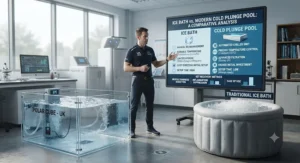
The terms get thrown around interchangeably online, and honestly, the line is blurrier than most articles admit. Strictly speaking, an “ice bath” describes the method — filling any vessel, even a regular bathtub or a builder’s trough, with cold water and bagged ice. A “plunge pool,” or cold plunge pool, is purpose-built: insulated walls, a drain system, sometimes a chiller, and a design specifically for repeated cold-water immersion rather than a one-off DIY dunk.
In practice, most of the products on this list blur both definitions — the The Cold Pod is technically an ice bath in a purpose-built shell, while the Nurecover Plunge + Chiller has genuinely moved past needing ice at all. The real distinction that matters for buyers isn’t the label, it’s whether you’re managing cooling manually (ice baths, budget tubs) or whether the system manages it for you (chiller-equipped plunge pools). If you enjoy the ritual of prepping ice the night before, a traditional ice bath setup works fine and costs far less upfront. If convenience and consistency matter more to you than ritual, a chiller-based plunge pool removes that entire step from your week.
Chiller-Ready Plunge Pool Review: Is the Upgrade Worth It?
Reviewing the chiller-ready tier of this market honestly means being upfront about what you’re actually paying for: not colder water, necessarily, but consistent water, on your schedule, without manual labour. A well-managed ice bath can hit similarly low temperatures to a chiller unit — the difference is that the chiller holds that temperature indefinitely, filters the water continuously, and needs zero weekly ice-buying trips.
Independent comparative testing of chiller-bundled systems has generally found that mid-range bundles like the Nurecover Plunge + Chiller deliver a large share of the performance of premium units costing several times more, particularly on cooling speed and temperature accuracy, with the main gaps showing up in build materials, noise levels and aesthetics rather than raw cooling ability. The Ice Barrel 500‘s NPT chiller ports represent a middle path — you’re not locked into a bundled chiller, so you can shop separately for a compressor that fits your budget and add it whenever you’re ready, rather than committing to the full spend upfront.
Our honest verdict: the upgrade is worth it specifically for people plunging three or more times weekly, where the cumulative time and cost of buying ice outweighs the higher initial outlay within roughly a year of regular use. For occasional or seasonal plungers, a well-insulated ice-only tub like the Arctic Performance 400L XL remains the more sensible spend.
Post-Workout Routines: Where the Cold Plunge Fits
Slotting a cold plunge into an existing training routine is less complicated than the wellness-industry framing suggests. Most protocols referenced in exercise-recovery research use water in the 10-15°C range for somewhere between five and fifteen minutes, generally within the first hour or two after exercise, when the goal is reducing perceived soreness and blunting the immediate inflammatory spike from a hard session.
Where it gets more nuanced — and where a lot of gym-floor advice oversimplifies things — is around strength and hypertrophy training specifically. If your primary goal is building muscle rather than pure endurance recovery, some coaches recommend spacing a cold plunge several hours away from resistance training, since blunting inflammation too aggressively immediately post-lift may interfere with the adaptation signal your muscles are trying to generate. For endurance athletes, team-sport players facing a quick turnaround, or anyone simply chasing reduced next-day soreness rather than long-term muscle growth, plunging straight after the session remains the more common and reasonably well-supported approach.
Temperature Control: What Actually Matters
Not all “cold” is created equal, and temperature control is where budget and premium products genuinely diverge rather than just differing on paint job. Ice-only tubs like the The Cold Pod and CalmMax Oval Ice Bath Tub give you a starting temperature that then drifts upward throughout your session and across the day — perfectly fine for most users, but it means your Tuesday plunge might be a few degrees warmer than your Thursday one depending on ambient temperature and how much ice you added.
Chiller-equipped systems solve this by holding a set temperature continuously, which matters most for people tracking recovery metrics consistently or those with specific therapeutic targets from a physio. The Renu Therapy Cold Stoic 2.0‘s app-based Wi-Fi control takes this furthest, letting you pre-set and monitor temperature remotely, while the Ice Barrel 500 and Nurecover Plunge + Chiller rely on the chiller’s own onboard display or basic remote. Here’s what most listings won’t tell you plainly: a built-in thermometer, like the one bundled with the LyfeFocus Cold Therapy Pod or the Arctic Performance 400L XL, closes most of the practical gap for casual users without the cost of a full chiller — you may not get automatic temperature holding, but you do get an accurate read on exactly what you’re getting into.
Muscle Soreness Relief: What the Science Really Says
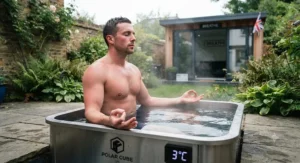
This is worth addressing honestly rather than repeating marketing claims, because the evidence base is genuinely more mixed than most product pages suggest. A well-regarded Cochrane review of cold-water immersion trials found some evidence that cold-water immersion reduces delayed onset muscle soreness after exercise compared with passive rest, though the overall trial quality was rated low, meaning the effect is real-ish but shouldn’t be oversold as a guaranteed fix.
More recent analysis backs up the general direction while adding useful nuance: a 2026 systematic review and meta-analysis in Frontiers in Sports and Active Living, pooling 30 randomised controlled trials across 527 participants, found cold water immersion produced a statistically significant reduction in post-exercise creatine kinase levels alongside meaningfully reduced perceived muscle soreness compared with passive rest. Crucially, though, these biochemical and soreness-related benefits were concentrated within the first 24 hours post-exercise and tended to fade by the 48-to-72-hour mark, meaning a single cold plunge session isn’t going to meaningfully change how you feel three days later — it’s most useful for that immediate next-day recovery window rather than as a long-term fix.
Practically, this means the honest expectation for any of the seven products above is: noticeably less next-day soreness after a hard session, not a magic elimination of fatigue, and the benefit is strongest when used consistently rather than as an occasional treat.
Common Mistakes When Buying a Cold Plunge Pool
The single biggest mistake is buying based on Instagram aesthetics rather than realistic usage frequency — a beautiful furniture-grade unit like the Renu Therapy Cold Stoic 2.0 is wasted money if you’re realistically a once-a-fortnight plunger who’d be perfectly served by the The Cold Pod. A close second is underestimating ongoing costs: ice-only tub owners frequently forget to budget for the weekly ice spend, which can add up to a meaningful annual sum for regular users and shifts the maths meaningfully in favour of chiller-based systems over time.
Buyers also commonly overlook drainage access — a tub without an easy drain and hose setup, unlike the Arctic Performance 400L XL‘s design, turns every water change into an unpleasant bucket-carrying chore. Finally, people frequently skip checking dimensions against their actual available space, then discover an oval tub doesn’t fit where an upright barrel like the Ice Barrel 500 would have done comfortably.
Long-Term Cost & Maintenance: The True Cost of Ownership
| Product | Upfront Cost | Ongoing Cost (Annual Estimate) | Maintenance Level |
|---|---|---|---|
| The Cold Pod | Under £130 | Regular ice purchases | Weekly water changes |
| Arctic Performance 400L XL | £220-£300 | Regular ice purchases | Weekly water changes |
| Nurecover Plunge + Chiller | £800-£1,000 range | Modest electricity cost | Monthly filter checks |
| Renu Therapy Cold Stoic 2.0 | £4,000+ range | Modest electricity + filters | Minimal, largely automated |
Looking at the table, the upfront-cheap options aren’t necessarily the cheapest over three to five years once you factor in ice purchased weekly by a committed user — a chiller unit’s higher purchase price is partly offset by near-zero consumable spend afterwards. For occasional users, though, the ice-only tubs remain genuinely cheaper overall, since low usage frequency keeps their ongoing ice cost minimal too.
🔍 Weighing upfront price against years of ice bags? Compare current prices on the option that matches your usage above.🤗
Safety, Regulations & Electrical Compliance Guide
Anything with a plug attached — chillers included — needs to meet UK electrical safety standards before it’s legally sold here. GOV.UK’s guidance on using the UKCA marking confirms legislation currently in force allows the UKCA marking to be placed on a label affixed to a product, or on an accompanying document, until 11pm on 31 December 2027, and manufacturers can still choose to use the CE mark instead where recognised, giving businesses flexibility on which conformity route they take for the Great Britain market. Before buying any chiller-equipped unit like the Nurecover Plunge + Chiller, Ice Barrel 500 chiller add-on, or Renu Therapy Cold Stoic 2.0, check the listing or manual for a UKCA or CE mark and a manufacturer’s declaration of conformity — reputable sellers will have this readily available.
Beyond electrical compliance, basic physical safety matters more than most listings emphasise. Sudden cold immersion triggers an involuntary gasp reflex and a spike in heart rate — the same mechanism behind open-water cold water shock — so easing in gradually rather than plunging straight to the neck reduces risk meaningfully, particularly for anyone with an existing heart condition, who should check with a GP before starting. Child safety matters too: only the Renu Therapy Cold Stoic 2.0 on this list includes built-in lid locks as standard, so households with young children using any other product should add a secure cover or supervise access closely.
Features That Actually Matter (And Those That Don’t)
Cutting through the marketing noise: insulation layer count, drain and hose access, and genuine chiller-port compatibility are the three features worth paying extra for, because they directly affect how much time and money you spend maintaining the tub week to week. Bluetooth connectivity, ambient lighting, and app-based session logging are pleasant extras on premium units like the Renu Therapy Cold Stoic 2.0, but they don’t meaningfully change your recovery outcome compared with a basic thermometer and a stopwatch.
Cover quality deserves more attention than it typically gets — a reflective, well-fitted cover like the one on The Cold Pod genuinely slows daytime heat gain and reduces debris, while a flimsy cover on a budget tub barely earns its keep. Capacity matters far less than most buyers assume, too: unless you’re notably tall or broad-framed, the difference between a 300L and 490L tub rarely changes the actual recovery experience — it mostly changes how much water and ice you need to fill it.
FAQ: Cold Plunge Pool for Recovery
❓ How cold should a cold plunge pool be for recovery?
❓ Do I need a chiller, or is ice enough?
❓ Can a cold plunge pool go indoors?
❓ How long does a cold plunge pool last before it needs replacing?
❓ Is a cold plunge pool safe for everyone?
Conclusion: Which Cold Plunge Pool Is Actually Right for You?
There’s no single “best” cold plunge pool for recovery — there’s only the best one for your budget, your space, and how often you’ll genuinely use it. If you’re testing the waters, quite literally, The Cold Pod or CalmMax Oval Ice Bath Tub remove almost all the financial risk from finding out whether this habit sticks. If you’ve already decided cold plunging is a permanent fixture and you’re tired of hauling ice bags, the Nurecover Plunge + Chiller offers the best balance of genuine chiller performance against sensible cost. And if space, aesthetics or daily-use convenience matter more than saving money, the Ice Barrel 500 and Renu Therapy Cold Stoic 2.0 sit at the top of this list for good reason.
Whichever you choose, the underlying evidence supports realistic expectations: reduced next-day soreness and a genuinely calming post-exercise ritual, not a miracle cure. Start small, ease in gradually, and let consistency — not the price tag — do the actual work.
Recommended for You
- Cold Water Plunge Pool UK: 7 Genuinely Good Picks for 2026
- Shaded Paddling Pool for Babies: 7 Best Picks for 2026 UK
- Water Play Centres 2026: 7 Best Splash Pads; Slides
Disclaimer: This article contains affiliate links. As an Amazon Associate, I earn from qualifying purchases. If you purchase products through these links, we may earn a small commission at no additional cost to you.
✨ Found this helpful? Share it with your friends! 💬🤗
