
In This Article
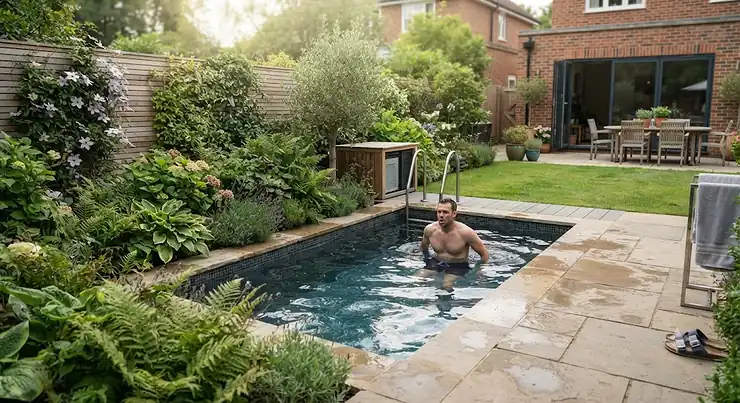
There’s a particular kind of madness to standing in your dressing gown at 6:45am, staring at a tub of water cold enough to make your ankles argue with your brain. And yet here we all are. Cold water plunge pools have gone from a fringe biohacker curiosity to something your neighbour, your personal trainer, and quite possibly your mum now own. What used to mean a shivering dash into the North Sea in November has been repackaged into something you can do in your dressing gown, in your own garden, before the kettle’s even boiled.
The appeal isn’t complicated: a controlled, repeatable cold water plunge pool experience, without tides, currents, or a forty-minute drive to the coast. But “just buy a tub” undersells how different these products actually are. Some are little more than a reinforced paddling pool; others are chiller-compatible systems that would look at home in a Premier League training ground. This guide walks through seven real, currently available options — budget, mid-range and premium — with honest analysis of who each one actually suits, plus the practical detail on portable cold plunge pool setups, garden vs indoor use, and seasonal storage that most listings skip entirely.
What Is a Cold Water Plunge Pool?
A cold water plunge pool is a small, insulated tub — typically 250 to 500 litres — designed for full-body cold water immersion at temperatures roughly between 3°C and 15°C, used for post-exercise recovery, stress management and general cold exposure practice, either with ice, a chiller unit, or naturally cold tap water.
That’s the dictionary version. As Wikipedia’s overview of ice bath practice notes, the method remains genuinely debated in sports science circles, which is exactly why the honest, spec-grounded analysis in this guide matters more than marketing claims. In practice, the category splits into three rough tiers. At the entry level you’ve got inflatable or foldable soft-shell tubs that you fill, use, and drain — cheap, portable, and genuinely fine for casual use. In the middle sit hard-shell insulated tubs designed to hold cold water for hours and, in some cases, connect to an external chiller. At the top end you get premium builds — proper insulation, chiller compatibility as standard, and materials chosen to survive a British winter rather than merely tolerate one.
Quick Comparison Table
| Product | Type | Capacity | Chiller-Compatible | Best For |
|---|---|---|---|---|
| The Cold Pod | Insulated soft-shell | 300L | No | The Cold Pod — first-timers wanting an all-rounder |
| WAVYEASE Foldable Tub | Portable foldable | ~150L | No | WAVYEASE Foldable Tub — small gardens & flats |
| Polar Recovery 2.0 | Insulated hard-shell | 370L | Yes | Polar Recovery 2.0 — upgrading to a chiller later |
| Arctic Performance | 5-layer insulated | 400L | Partial | Arctic Performance — budget-conscious daily users |
| CalmMax Oval Tub | Oval insulated | 492L | Partial | CalmMax Oval Tub — taller users, families |
| LyfeFocus Cold Therapy Pod | Accessory bundle | 100cm dia. | Partial | LyfeFocus Cold Therapy Pod — buyers who want everything included |
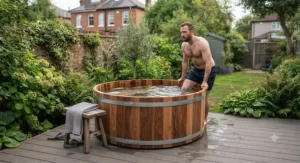
| Cheeky Chicks Oak Barrel | Reclaimed oak whisky barrel | 500L | No | Cheeky Chicks Oak Barrel — a garden feature that looks the part |
Reading across this table, capacity and chiller-compatibility tend to move in opposite directions from portability — the bigger and more “set it and forget it” a tub gets, the less realistic it is to fold it up and shove it under the stairs. Budget doesn’t map cleanly onto quality here either: Arctic Performance punches well above its likely price bracket on insulation layers, while the Cheeky Chicks Oak Barrel costs more for aesthetics and heritage than for any functional advantage over a good plastic tub. If chiller-compatibility matters to you long-term, buying it in from day one (as with Polar Recovery 2.0) avoids an expensive second purchase down the line.
✨ Ready to find your match? Compare live prices below before they’re gone.
Top 7 Cold Water Plunge Pools: Expert Analysis
1. The Cold Pod — best all-rounder for first-timers
The Cold Pod built its reputation on being the tub that turns up in “best ice bath” round-ups again and again, and the reason is simple: it does the fundamentals well without overcomplicating things. The 300-litre insulated tub is wrapped in a reflective, zip-up cover that keeps ambient heat out, and at roughly 75cm in length, width and height it’s compact enough for a patio corner without dominating it.
On paper, the multi-layer insulated construction is what separates this from a glorified paddling pool — reviewers and independent buying guides note it can hold water at low single-digit temperatures for several hours once chilled with ice, which matters enormously if you’re trying to fit a plunge around a work schedule rather than the other way round. Based on the spec comparison with cheaper unbranded tubs, the thicker wall insulation here is doing real work rather than just being a marketing line.
This is the model to start with if you’ve never owned a plunge pool before and want something that won’t punish you for indecision — it’s forgiving on setup, doesn’t demand a chiller purchase, and Which?’s independent buying guide on ice baths consistently flags it as a sensible, no-frills entry point rather than a gimmick. Reviewers consistently mention that the lid is a genuine asset for keeping debris and heat out between sessions, which is more useful in a UK garden — where “sunny spell” is a rumour, not a forecast — than you’d think.
Pros:
- ✅ Reflective cover holds cold water temperature for hours
- ✅ Compact 75cm footprint suits small gardens and patios
- ✅ Widely reviewed with consistent positive sentiment
Cons:
- ❌ No chiller port — ice or cold tap water only
- ❌ Cover needs careful re-zipping to stay effective
Expect The Cold Pod to sit in the low-to-mid price bracket — check current price, as costs shift with stock levels — and for the money it remains one of the most sensibly built entry points into cold water plunge pools on the market.
2. WAVYEASE Foldable Tub — most portable for flats and small gardens
If storage space is your actual constraint rather than your budget, WAVYEASE Foldable Tub solves a different problem entirely. This is a collapsible soaking tub, roughly 80cm by 66cm, built from reinforced PVC over a support frame, designed to fold flat for storage rather than sit permanently assembled in a corner. It’s not exclusively a cold plunge product — it doubles as a warm soaking tub too — but that dual-purpose design is precisely what makes it attractive to renters and flat-dwellers who can’t dedicate permanent garden real estate to a single-use tub.
What most buyers overlook about foldable tubs is the trade-off they’re making: less rigid insulation in exchange for genuine portability. You won’t get the multi-hour cold-hold of a hard-shell design, so this suits people topping up with ice just before each session rather than those wanting the water to stay cold all day. The anti-slip base is a small but sensible touch, addressing one of the more legitimate safety complaints levelled at soft-shell tubs generally — getting in and out of a wet, cold plastic surface is exactly the moment ankles go.
Aggregated review sentiment for foldable cold plunge tubs in this style tends to flag drainage as the recurring gripe — a pipe-and-clamp system rather than a simple plug, which a fair few reviewers find fiddlier than it needs to be for a product otherwise built around convenience.
Pros:
- ✅ Folds flat — genuinely storable in a cupboard or car boot
- ✅ Doubles as a warm soak tub, not single-purpose
- ✅ Anti-slip base reduces entry and exit risk
Cons:
- ❌ Drainage via pipe/clamp is fiddlier than a simple plug
- ❌ Less effective at holding cold temperature over time
Priced firmly at the budget end — typically under £100 — WAVYEASE Foldable Tub earns its keep on flexibility rather than raw performance, and that’s exactly the trade most small-space buyers are happy to make.
3. Polar Recovery 2.0 — best pick if you’ll want a chiller eventually
Polar Recovery 2.0 is aimed squarely at people who suspect their cold plunge habit is going to stick, and want to buy once rather than twice. At 370 litres, it’s a genuinely capacious insulated tub, and the standout feature — dual valves plus chiller compatibility — means you can start with ice and bags from the corner shop, then bolt on a proper chiller unit later without replacing the tub itself.
Here’s what the spec sheet won’t spell out plainly: chiller-compatible ports are the single biggest factor in whether a cold plunge habit survives past March. Ice runs get old fast, and a tub that can’t accept a chiller locks you into that grind indefinitely. The rain-repellent lid is a small but genuinely useful UK-specific feature too — anyone who’s left an uncovered tub out during a proper downpour knows exactly why that matters for water quality and effective insulation.
Independent UK buying guides have flagged this as a stand-out in recent rounds of testing, largely because it avoids the classic mid-range trap of being neither properly insulated nor properly portable — it commits to being a serious, semi-permanent recovery tool and does that job well. Reviewers report the dual-valve drainage system is noticeably quicker to empty than single-valve competitors, which matters more than it sounds once you’re doing this three times a week through a British winter.
Pros:
- ✅ Chiller-compatible from day one — no future upgrade needed
- ✅ Rain-repellent lid genuinely useful for UK weather
- ✅ Dual valves drain noticeably faster than single-valve rivals
Cons:
- ❌ Heavier and bulkier than entry-level tubs
- ❌ Premium features push it above pure-budget pricing
Expect Polar Recovery 2.0 to sit in the mid-to-upper price bracket — a sensible middle-ground buy for anyone confident this isn’t a January-only habit.
4. Arctic Performance — best insulation-to-price ratio
Arctic Performance leans hard on one selling point — five layers of insulation in a 400-litre tub — and largely delivers on it. Reinforced PVC and Oxford fabric over a supportive frame gives it more structural rigidity than the cheapest foldable competitors, without pushing the price into premium territory.
Based on the spec comparison with single or double-layer budget alternatives, the extra insulation layers translate into meaningfully slower heat gain, which in practice means less ice needed per session and a longer usable window before you’re topping up again. That’s a genuine cost saving over a season, not just a marketing bullet point — ice isn’t free, and buying bags of it three times a week adds up quicker than most people budget for.
This is the model for someone who wants daily-use durability without stretching to chiller-equipped pricing — a keen home athlete, a couple sharing a routine, or anyone who’s decided cold plunging is a habit worth investing properly in but isn’t ready to spend on a full chiller rig. Aggregated review sentiment consistently praises the value proposition here specifically, with buyers repeatedly framing it as “does more than it should for the price.”
Pros:
- ✅ Five-layer insulation reduces ice consumption per session
- ✅ Sturdy frame construction for the price bracket
- ✅ Strong value-for-money sentiment across reviews
Cons:
- ❌ No full chiller port — ice-dependent for consistent cold
- ❌ Larger footprint than compact foldable options
Sitting comfortably in the budget-to-mid range, Arctic Performance is arguably the smartest pound-for-pound buy in this line-up if a chiller isn’t yet on your shopping list.
5. CalmMax Oval Tub — best for taller users and shared households
Size is the whole story with CalmMax Oval Tub. At 492 litres and roughly 105cm long, the oval shape gives noticeably more legroom than the round tubs dominating this category, which matters enormously if you’re over six foot or simply dislike sitting with your knees jammed against your chest. Five-layer insulation and a fitted lid round out a spec sheet that’s clearly been built with comfort as the priority, not just cold retention.
What most buyers overlook about capacity is how directly it affects cold-hold time — more water volume means more thermal mass, so once chilled, a larger tub like this one tends to warm back up more slowly than a compact 300-litre model, all else being equal. That’s useful if multiple people in a household are sharing sessions back-to-back rather than each starting from a fresh ice top-up.
This is the pick for households where more than one person will actually use it, or where anyone involved is on the taller side — a 5’4″ and a 6’3″ household member will both find this genuinely comfortable, which isn’t something you can say about every tub on this list. Reviewers consistently flag the oval shape specifically as the reason they chose this over round competitors of similar price.
Pros:
- ✅ Oval shape gives real legroom for taller users
- ✅ Larger water volume retains cold longer between top-ups
- ✅ Suits multi-person households sharing sessions
Cons:
- ❌ Takes up more garden or storage space than round tubs
- ❌ Heavier when full — awkward to reposition once filled
Priced in the mid-range bracket, CalmMax Oval Tub is the sensible choice whenever “will it actually fit me” is a real question rather than a hypothetical one.
6. LyfeFocus Cold Therapy Pod — best all-in-one accessory bundle
LyfeFocus Cold Therapy Pod takes a different approach entirely: rather than competing purely on tub specs, it bundles in the accessories that most buyers end up purchasing separately anyway — a thermometer, a foot mat, a protective lid, a groundsheet, and reusable ice blocks. At 100cm diameter, the tub itself is a solid mid-to-large size, but the real value proposition is what arrives in the box alongside it.
Here’s what the marketing copy won’t spell out clearly: buying these accessories individually after the fact typically costs more, in both money and hassle, than getting them bundled from the start. A groundsheet in particular is one of those items nobody thinks to buy until their patio is a small lake, and a decent thermometer matters more than most first-time buyers expect — guessing at water temperature is how people either give up too early (not cold enough to feel the benefit) or push into genuinely risky territory.
This is the sensible pick for someone who wants to be plunge-ready on day one without a second shopping trip to a garden centre or homeware shop — beginners in particular benefit from not having to research foot mats and groundsheets separately when they’re already deciding on the tub itself. Aggregated customer sentiment repeatedly highlights the completeness of the bundle as the deciding factor over cheaper tub-only competitors.
Pros:
- ✅ Includes thermometer, foot mat, lid and groundsheet
- ✅ Reusable ice blocks reduce ongoing ice-bag costs
- ✅ Genuinely plunge-ready straight out of the box
Cons:
- ❌ Bundle pricing sits above tub-only competitors of similar size
- ❌ Reusable ice blocks need freezer space to recharge
Given the accessory value included, LyfeFocus Cold Therapy Pod typically lands in the mid-to-premium bracket but arguably represents better overall value than its tub-only price comparison suggests once you factor in what you’re not buying separately.
7. Cheeky Chicks Oak Barrel — best premium garden feature
For anyone who wants their cold water plunge pool to look less like sports equipment and more like a feature of the garden itself, Cheeky Chicks Oak Barrel is a genuine reclaimed whisky barrel conversion — 500 litres, solid oak staves, a removable lid and a working drain tap, built from barrels that previously aged actual whisky. It’s the aesthetic outlier on this list, and it knows it.
Solid oak brings genuine natural insulation — thick, dense wood holds cold water noticeably better than thin plastic — but on paper this means a heavier, less portable product than anything else here; expect these barrels to weigh well over 70kg empty, before you’ve added a drop of water. That’s a permanent garden fixture, not a fold-away weekend accessory, and buyers should plan accordingly, including checking access routes before delivery day.
What most buyers overlook about oak barrel tubs is maintenance: unlike sealed plastic, wood needs to stay damp to remain watertight, so leaving one empty for extended periods risks the staves drying out and shrinking, leading to leaks. Reviewers and specialist retailers consistently flag this — it’s less “buy and forget” and more “buy and maintain,” which suits committed cold plungers with the patience for it far more than casual dabblers.
Pros:
- ✅ Genuine reclaimed oak gives natural, superior insulation
- ✅ Striking garden feature unlike any plastic alternative
- ✅ Brass tap makes draining simple despite the size
Cons:
- ❌ Very heavy — a permanent fixture, not a portable option
- ❌ Requires ongoing wood maintenance to stay watertight
Sitting at the premium end of this list, Cheeky Chicks Oak Barrel costs more for heritage and looks than for functional advantage — but for buyers who want their cold plunge pool doubling as garden design, that trade-off is entirely the point.
Portable Cold Plunge Pool: What “Portable” Actually Means
The phrase portable cold plunge pool gets used loosely across this category, and it’s worth being honest about what it actually buys you. True portability — fold it, carry it, store it in a cupboard — is really only delivered by soft-shell foldable designs like WAVYEASE Foldable Tub. Everything else on this list, including budget hard-shell options like Arctic Performance, is “movable with effort” rather than genuinely portable; you can drain it, deflate the frame, and relocate it, but it’s not a weekend-bag item.
Here’s the trade-off that matters most: portability and cold-retention performance pull in opposite directions almost every time. A tub thin and light enough to fold into a bag simply can’t carry the same insulation mass as a rigid, multi-layer hard shell. If you’re renting, living somewhere without garden access, or genuinely need to move the tub between locations regularly, accept the retention trade-off and go foldable. If permanence isn’t an issue, a hard-shell option like The Cold Pod or Polar Recovery 2.0 will reward you with far less faffing about with ice top-ups.
Garden vs Indoor Use: Which Suits Your Space?
This is one of the most common questions buyers get wrong before purchase, and it genuinely changes which product suits you. Garden use gives you space, drainage options, and no risk to your flooring — but it exposes the tub to weather, which is exactly why features like the rain-repellent lid on Polar Recovery 2.0 aren’t gimmicks in the UK climate specifically. Indoor use — bathroom, garage, utility room — protects the tub from rain and frost but raises real practical questions: floor loading (a full 400-litre tub weighs roughly 400kg once you add the water), ventilation if you’re using a chiller, and simply whether the space is large enough to get in and out safely.
According to the RYA’s guidance on cold water shock, sudden immersion in cold water triggers involuntary physiological responses regardless of setting — which is a useful reminder that “indoors and controlled” doesn’t mean “risk-free,” and the same entry precautions apply whether you’re in a garden or a garage. If you’re torn, consider this rule of thumb: garden use suits larger, weather-resistant hard-shell tubs and barrels; indoor use suits compact, easily-drained options where floor protection and ventilation have been properly thought through in advance.
✨ Compare your top garden and indoor picks side by side before you commit.

How to Choose a Cold Water Plunge Pool
- Decide your space constraint first, not your budget. A stunning premium tub is useless if it can’t physically fit or be stored where you live — measure before you shop, not after.
- Be honest about how often you’ll actually use it. Occasional dabblers are usually better served by a budget foldable tub; daily users get genuine long-term value from chiller-compatible options.
- Factor in ongoing ice costs, not just the purchase price. A cheaper tub without good insulation can cost more over a year in ice bags than a pricier, better-insulated alternative.
- Check drainage before you buy, not after your first session. Pipe-and-clamp systems are slower than simple plugs — a small detail that becomes a big irritation weekly.
- Consider who else will use it. Households with taller members or multiple users benefit from larger capacity options like the oval-shaped tubs on this list.
- Think about weather exposure honestly. A tub without a proper lid left outdoors through a UK winter will fill with rainwater and debris faster than you’d think.
- Decide upfront whether a chiller is in your future. Buying chiller-compatible from the start avoids a costly second purchase if your habit sticks past the first few months.
Real-World Scenario: Which Buyer Suits Which Product
Picture three fairly typical UK buyers. First, there’s Priya, a 28-year-old renter in a first-floor flat with a small balcony and no storage space to spare — for her, WAVYEASE Foldable Tub is close to the only sensible option on this list, since it folds away and doesn’t demand permanent outdoor space she simply doesn’t have.
Then there’s Dave, a 41-year-old five-a-side regular with a modest garden and a genuine, established habit of three sessions a week through most of the year — for him, the ice-bag grind of a budget tub gets old fast, and Polar Recovery 2.0‘s chiller compatibility means he’s investing in a system that scales with a habit that’s clearly sticking rather than a phase that might fade.
Finally, there’s the Hendersons, a family of four with a decent-sized garden who want something the whole household — including a 6’2″ teenager — can use together on weekend mornings; CalmMax Oval Tub‘s extra legroom and larger capacity make it the only realistic fit for a shared, multi-user routine like theirs.
Common Mistakes When Buying a Cold Water Plunge Pool
Buying on price alone tops the list — the cheapest tub often costs more over a year once you tally up ice bags, replacement parts, and an early upgrade because it didn’t suit the actual routine. A close second is ignoring drainage entirely until the first empty-and-clean session, at which point a pipe-and-clamp system that seemed fine on the spec sheet becomes a genuine weekly chore. Buyers also frequently underestimate weight — a filled 400-litre tub is not something you casually reposition, and planning delivery and final placement matters more than most listings suggest.
Skipping a lid or cover is another recurring error; an uncovered tub left outdoors collects leaves, rain and debris fast, undermining both hygiene and insulation. And perhaps the most common mistake of all: buying capacity for an imagined future household rather than the one that actually exists — a single user rarely needs a 492-litre oval tub, and the extra size just adds cost, weight and cleaning time for no real benefit.
Practical Usage Guide: Setup, First 30 Days and Maintenance
Getting a new tub right in its first month matters more than most buyers expect. On setup day, choose a flat, stable, well-drained surface — patio slabs or decking rather than soft lawn, which will sink unevenly under the weight once filled. Rinse the tub thoroughly before first use, regardless of how clean it looks in the box; manufacturing residue is common and easily missed.
For the first fortnight, resist the urge to go straight for the coldest possible temperature. Building tolerance gradually — starting a few degrees above your eventual target and reducing over sessions — is both safer and more sustainable than shocking yourself on day one and abandoning the habit by week two. Water hygiene is the most commonly neglected maintenance task: without a chiller’s filtration, standing water needs draining and refreshing roughly every three to five days for regular use, more often in warmer spells. A simple pool-safe sanitiser, used sparingly and rinsed properly, extends usable water life considerably.
Common first-30-days mistakes include leaving the tub uncovered overnight (dramatically increasing ice or chiller workload the next morning), overfilling past the recommended line, and neglecting to check that any electrical chiller components are on a properly protected, weatherproof outdoor socket — worth double-checking against general electrical safety guidance if you’re setting up outdoors for the first time.
Seasonal Storage: Getting Your Cold Plunge Pool Through the Year
Seasonal storage is where most buyers lose value on their investment, simply by not planning for it. Soft-shell and foldable tubs like WAVYEASE Foldable Tub should be fully drained, cleaned, thoroughly air-dried, and stored flat or loosely rolled — never tightly folded while still damp, which encourages mould in the seams. Hard-shell tubs such as The Cold Pod or Arctic Performance can often stay assembled year-round if their location is sheltered, but benefit hugely from a breathable cover during any extended off-season to prevent UV degradation of the outer material.
Oak barrel options like Cheeky Chicks Oak Barrel need the opposite treatment to plastic: they should never be left bone dry for long stretches, since the wood staves rely on moisture to stay swollen and watertight. A light refill every few weeks during any pause in use, rather than a full drain-and-forget, protects the barrel considerably better over a British winter. Whatever the material, frost is the real enemy — any tub left full and unused during a hard freeze risks cracked components or, with a chiller attached, damaged internal pump parts, so draining before a predicted cold snap if you’re pausing use is genuinely worth the ten minutes it takes.
✨ Don’t Miss These Exclusive Deals!
🔍 Take your cold water recovery routine to the next level with these carefully selected products. Click on any highlighted item to check current pricing and availability. These tools will help you build a genuine, sustainable cold water therapy habit your body will thank you for.
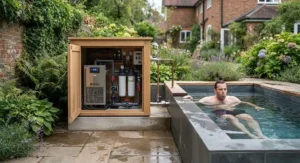
“Cold Water Plunge Pool” vs Traditional Open Water Swimming
| Factor | Cold Water Plunge Pool | Open Water Swimming |
|---|---|---|
| Temperature control | Fully adjustable | Dictated by season/location |
| Accessibility | Home, any time | Travel and daylight dependent |
| Safety supervision | Self-managed at home | Often unsupervised, higher risk |
| Best For | Home routine consistency | Full-body movement & scenery |
The comparison isn’t really about which is “better” — it’s about what each one solves. A cold water plunge pool wins decisively on consistency and control: no tides to check, no forty-minute drive, no daylight constraints, which is precisely why home ownership of these products has grown so fast. Open water swimming, on the other hand, delivers something a static tub simply can’t — genuine movement, changing conditions, and the mental engagement of a wider environment — but it comes with materially higher risk. According to NHS Inform’s guidance on open water swimming risks, open water swimming carries specific dangers around cold water shock, currents and after-drop that a controlled home tub largely avoids by design. For most people building a sustainable cold exposure habit, the home plunge pool is the lower-friction, lower-risk starting point, with open water as an optional graduation once confidence and tolerance are established.
Long-Term Cost & Maintenance: The Real Total Cost of Ownership
The purchase price is only ever the opening figure. Ice-dependent tubs without chillers typically need two to four bags of ice per session for a proper temperature drop, which — at even modest UK supermarket prices — adds up to a genuinely significant annual sum for anyone plunging three or more times weekly. This is precisely where chiller-compatible options like Polar Recovery 2.0 start to make long-term financial sense despite the higher upfront cost: a chiller unit’s electricity draw is real but generally modest compared with an ongoing ice habit, and it removes the weekly shopping trip entirely.
Water treatment adds a smaller but recurring cost across every option — sanitiser tablets or liquid, replacement filter cartridges where fitted, and periodic full drain-and-refill cycles that also carry a (modest) water cost. Wear items matter too: covers and lids degrade under UV exposure faster than the tubs themselves and are worth budgeting to replace every couple of years for anything kept permanently outdoors. Weighed together, a genuinely honest total cost of ownership calculation over three years often narrows the price gap between a “cheap” ice-only tub and a “pricier” chiller-compatible one considerably more than the sticker prices alone would suggest.
Safety, Regulations and Compliance Guide
Cold water immersion is broadly unregulated as a consumer product category in the UK, but general product safety standards still apply to anything sold as a cold water plunge pool, and reputable retailers will display relevant certification. The bigger safety consideration is physiological rather than regulatory: cold water shock is a genuine, involuntary response that can affect fit, healthy people, not just those with pre-existing conditions, and building tolerance gradually rather than diving straight for extreme cold is the single most important safety practice for any home user.
Anyone with cardiovascular conditions, uncontrolled high blood pressure, or who is pregnant should seek medical advice before starting cold water immersion, and nobody should use a plunge pool alone if there’s any doubt about their tolerance or health status — a second person nearby, even just in the house, matters more than most first-time buyers assume. If you’re using an electrical chiller outdoors, ensure it’s connected via a properly rated, weatherproof residual current device (RCD) protected socket; standard indoor extension leads are not designed for damp outdoor use and represent a genuine, avoidable risk.
Features That Actually Matter (And Those That Don’t)
Genuinely useful features, based on the spec comparisons across this list, include a proper insulated lid (cuts ice consumption noticeably), chiller compatibility (removes the ongoing ice grind for regular users), and a fast, accessible drainage valve (a small detail that becomes a big weekly time-saver). Insulation layer count matters too, though diminishing returns kick in beyond a certain point — the jump from one layer to five is significant, but five to seven layers rarely justifies a large price premium.
Features that generate more marketing copy than genuine value include built-in phone holders (nice, rarely essential), elaborate colour options at a premium (functionally irrelevant), and oversized capacity bought “just in case” for a household that will realistically only ever use it solo. What most buyers overlook is that a decent thermometer, while cheap and easy to dismiss as a nice-to-have, genuinely improves both safety and consistency — knowing your actual water temperature, rather than guessing, is one of the few features here with a real safety dimension attached.
Cold Water Plunge Pools for Beginners
Anyone starting out should prioritise forgiveness over performance specs. A budget, non-chiller tub like The Cold Pod or Arctic Performance is genuinely the smarter first purchase, not a compromise — it lets a new user establish whether the habit actually sticks before committing to premium, chiller-equipped pricing. Beginners consistently benefit more from a lower starting temperature and shorter session length than from an expensive tub; the equipment matters far less than the gradual, sensible build-up in those first few weeks.
Comfort and confidence-building features — a decent foot mat, an easy step in and out, a lid that’s simple to remove one-handed — genuinely matter more to a nervous first-timer than an extra insulation layer or a chiller port they won’t use for months, if ever. If budget allows one upgrade over the absolute cheapest option, a bundled accessory set like LyfeFocus Cold Therapy Pod removes several small decision points that can otherwise put a hesitant beginner off entirely before they’ve even filled the tub.
What to Expect: Real-World Performance
Specs on a page rarely translate directly into lived experience, so here’s the honest, spec-grounded version. A well-insulated 300 to 400 litre tub, properly iced, will typically hold a usable low-single-digit temperature for two to four hours before meaningfully warming — plenty for a single household’s morning routine, tight if several people are queuing sessions back-to-back without a chiller. Entry and exit, not the cold itself, tends to be where most first-timers report the biggest surprise: wet plastic or oak edges get slippery fast, which is exactly why anti-slip bases and sturdy step access matter more in practice than they seem to on a spec sheet.
Noise is a non-factor for ice-only tubs but worth considering for chiller-equipped setups — most modern units are reasonably quiet, but positioning near a bedroom window is worth avoiding if you’re an early-morning plunger living close to neighbours. Weather resistance, particularly for garden setups, tends to be the single biggest gap between expectation and reality: a tub marketed as “outdoor use” still benefits enormously from a proper cover during sustained UK rain, regardless of what the box implies about its all-weather credentials.

FAQ
❓ Is a cold water plunge pool the same as an ice bath?
❓ How cold should a home cold plunge pool be?
❓ Can I use a cold water plunge pool indoors safely?
❓ Do cold water plunge pools need a chiller to work?
❓ How often should I clean my cold water plunge pool?
Conclusion
There’s no single “best” cold water plunge pool, because the honest answer depends entirely on which trade-off matters most to you — portability, capacity, chiller compatibility, or simply how the thing looks sitting in your garden. The Cold Pod remains the sensible starting point for genuine first-timers, WAVYEASE Foldable Tub solves the space problem that rules out everything else for flat-dwellers, and Polar Recovery 2.0 rewards anyone confident enough in the habit to invest in chiller-ready infrastructure from day one.
What all seven products share is that none of them are magic — the real value in cold water plunge pools comes from consistent, sensibly-built-up use, not from any single spec on a box. Get the fundamentals right — the right size for your space, honest expectations about maintenance, and a sensible approach to seasonal storage — and almost any of these seven will serve you well through a full British year, garden frost and all.
✨ Ready to build your own cold water recovery routine? Take a closer look at today’s top picks and find the plunge pool that actually fits your life. 💬
Recommended for You
- Cold Plunge Pool for Recovery: 7 Tested Picks for 2026
- Cold Water Plunge Pool UK: 7 Genuinely Good Picks for 2026
- Shaded Paddling Pool for Babies: 7 Best Picks for 2026 UK
Disclaimer: This article contains affiliate links. As an Amazon Associate, I earn from qualifying purchases. If you purchase products through these links, we may earn a small commission at no additional cost to you.
✨ Found this helpful? Share it with your friends! 💬🤗
