
In This Article
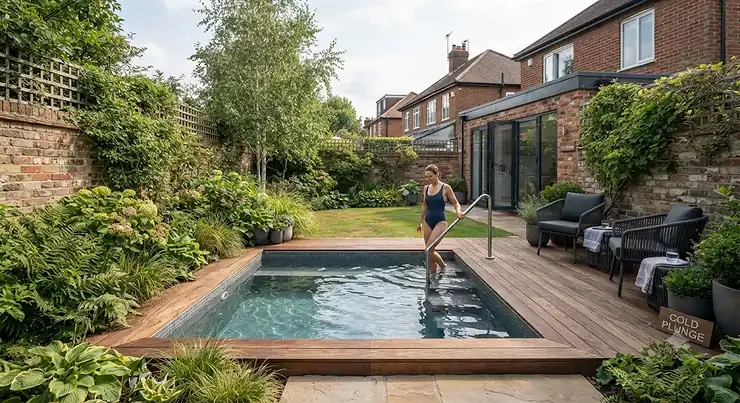
There’s a particular kind of silence that happens right before you lower yourself into freezing water — that half-second where your brain quietly asks if this was really necessary. It was. Probably. A cold water plunge pool is, in plain terms, a small tub or vessel designed to hold chilled water deep enough for full or near-full body immersion, typically used for 1–5 minutes at temperatures between roughly 3°C and 15°C to support muscle recovery, circulation and mental resilience. What used to be the reserve of rugby clubs and elite training facilities has, over the past few years, quietly become a fixture in ordinary British gardens, garages and bathrooms.

The practice itself is nothing new — sports therapy has used cold-water immersion for muscle recovery for decades, with the modern home version simply making it more convenient. That shift matters, because the UK market for home cold plunge equipment has genuinely exploded — and with it, a flood of near-identical inflatable tubs, wildly different insulation claims and price tags ranging from under £80 to well over £500. Working out which cold water plunge pool actually earns its keep, rather than which one simply has the loudest marketing copy, takes proper digging into specs, real owner feedback and how each product performs once the novelty wears off. That’s what this guide does. We’ve pulled together seven genuinely available options, sat with the spec sheets, and worked through where each one shines and where it quietly falls short — including honest coverage of a cold plunge tub for home use at every budget, and a proper look at an inflatable cold plunge pool for anyone short on space.
Whether you’re chasing cold therapy recovery after training, curious about folding one into your home wellness routines, or simply trying to figure out whether insulation quality is worth paying extra for, you’ll find a straight answer here rather than a rewritten product listing.
Quick Comparison Table
| Product | Type | Price Range | Best For |
|---|---|---|---|
| The Cold Pod | Soft-shell, no chiller | Around £70–£160 | Absolute beginners on a tight budget |
| VEVOR Ice Bath Tub | Inflatable, chiller-ready | £90–£180 range | Best all-round inflatable cold plunge pool |
| Polar Ice Bath Recovery Tub 370L | Cylindrical inflatable | £120–£200 range | Most-reviewed, dependable all-rounder |
| Brisk Bear XL Oval Ice Bath Tub | Insulated inflatable, accessory bundle | £140–£220 range | Home use with tech extras (timer, thermometer) |
| The Cold Company Cold Plunge Tub | Thick-wall portable tub | £160–£260 range | Buyers prioritising temperature retention |
| Zennest Portable Ice Bath Tub | 6-layer insulated inflatable | £170–£280 range | Best insulation quality on this list |
| LyfeFocus Cold Therapy Pod | XL bundle with full accessories | £190–£320 range | Serious home wellness routines, families sharing one tub |
Looking across the table, there’s a clear split between entry-level soft-shell tubs that simply hold cold water and mid-to-premium options that actively work to keep it cold. If your priority is testing the waters (sorry) before committing, the The Cold Pod or VEVOR Ice Bath Tub make sense. If you already know cold plunging is sticking around in your routine, the extra insulation layers on the Zennest Portable Ice Bath Tub or the accessory-rich LyfeFocus Cold Therapy Pod pay for themselves in fewer ice runs. None of these are permanent chiller-plumbed installations — for most UK homes, a well-insulated portable tub is the more realistic and considerably cheaper starting point.
💬 Found a favourite already? Jump straight to the full breakdown below — or keep comparing first.🤗
Top 7 Cold Water Plunge Pools: Expert Analysis
1. The Cold Pod — lowest barrier to entry for first-timers
If you’ve never tried cold immersion and don’t want to commit serious money before you know whether it’ll stick, The Cold Pod is where most people start. It’s a soft-shell, PVC-walled tub that you fill with a hose and top up with bagged ice — no built-in chiller, no plumbing, no fuss.
The design is straightforward: a round or oval basin roughly wide enough to sit cross-legged, a drainage valve at the base, and a fabric cover to keep leaves and cats out between sessions. What you’re paying for here is accessibility, not engineering — there’s no insulated wall cavity doing the hard work for you, so the water warms up faster than pricier alternatives, especially outdoors on a mild day.
Honest analytical take: this is a genuinely sensible pick for someone testing cold therapy recovery for the first time or gifting a starter setup, but it’s a poor match for daily use in a household of three or four people, since reheating means refilling with fresh cold water and ice each time. Independent reviewers, including the fitness outlet BarBend, have flagged mixed durability at this end of the market, particularly around seam strength after repeated folding and storage. That’s a useful data point rather than a dealbreaker — treat it as a trial product, not a ten-year investment.
Pros:
- ✅ Lowest realistic entry price for trying cold immersion
- ✅ Simple hose-fill setup with no tools required
- ✅ Folds down small for garage or shed storage
Cons:
- ❌ No chiller compatibility, so ice costs add up fast
- ❌ Thinner walls mean faster reheating in mild weather
Price sits around £70–£160 depending on the bundle and cover included at the time of research; check current price before buying, as bundles rotate. For a first cold water plunge pool with zero long-term commitment, it’s fair value — just don’t expect it to survive years of hard daily use.

2. VEVOR Ice Bath Tub — best all-round inflatable cold plunge pool
VEVOR Ice Bath Tub is the clearest example of an inflatable cold plunge pool done properly rather than as an afterthought. It uses a multi-layer build — PVC inner liner, double-sided aluminium foil pearl cotton insulation, and a water-repellent nylon-bonded PVC outer shell — around a set of drop-stitch support tubes that keep the walls rigid once inflated.
The genuinely useful spec here is chiller compatibility: standard G1/2 inch ports mean you can bolt on a water chiller later without buying a whole new tub, or simply seal the ports and use ice in the meantime. Capacity runs from roughly 290 to 370 litres depending on the size variant, rated for use down to -20°C, which is more about material tolerance than a claim about how cold your water will actually get.
What most buyers overlook about this model is that the insulation layer does real work — mixed reviews on the market for similarly priced inflatable tubs cite fast reheat times, but VEVOR’s foil-backed pearl cotton lining is a genuine step up from basic single-layer PVC, and it shows in how long the water stays usable between top-ups. Aggregated owner feedback describes straightforward solo setup in around ten minutes and generally positive experiences with the included repair kit for punctures.
Pros:
- ✅ Chiller-ready G1/2 ports for future upgrades
- ✅ Genuine multi-layer thermal insulation, not just marketing
- ✅ Comes with pump, carry bag and puncture repair kit
Cons:
- ❌ Support tubes need firm, level ground to stay stable
- ❌ No chiller included as standard — sold separately
Expect a price in the £90–£180 range depending on capacity, at the time of research. For anyone specifically searching for an inflatable cold plunge pool with room to upgrade later, this is the pick that won’t need replacing the moment you decide to add a chiller.
3. Polar Ice Bath Recovery Tub 370L — the dependable, most-reviewed all-rounder
With well over a thousand ratings on Amazon UK, Polar Ice Bath Recovery Tub 370L has more real-world usage data behind it than almost anything else in this category, and that volume of aggregated review sentiment is genuinely useful when you’re trying to separate hype from reality.
Its cylindrical shape — around 85cm in diameter and rated for users up to 6’7″ — trades a slightly smaller footprint for a proper crossed-legged sitting position, which matters more than it sounds for anyone doing sessions longer than a couple of minutes. The Easy Flow Drainage System is a genuinely practical touch: a tap-and-unplug mechanism at the base rather than tipping the whole tub to empty it, which sounds trivial until you’ve tried draining 370 litres of cold water without one.
Here’s what the spec sheet won’t tell you, but aggregated buyer feedback does: the lightweight roughly 3kg build keeps it easy to move and store, but several reviewers note it feels less sturdy for permanent outdoor placement than heavier-walled alternatives, and one recurring theme in customer questions is that the tub arrives cold-neutral — you’ll need your own ice or ambient winter temperatures to get meaningfully below room temperature quickly.
Pros:
- ✅ Large, genuinely reviewed track record on Amazon UK
- ✅ Easy Flow Drainage System for simple emptying
- ✅ Roomy cylindrical design for crossed-leg sitting
Cons:
- ❌ Lightweight build raises durability questions outdoors long-term
- ❌ No insulation layer beyond the included thermal lid
At around £120–£200 depending on stock and seller, it represents solid value for a cold plunge tub for home use where day-to-day reliability matters more than premium build quality. The review volume alone makes it one of the lower-risk picks on this list.
4. Brisk Bear XL Oval Ice Bath Tub — best for home use with genuine tech extras
Brisk Bear XL Oval Ice Bath Tub leans into the accessory side of things rather than just being a bucket of cold water. Alongside the roughly 105-gallon (around 397-litre) oval basin, it ships with a digital timer, a floating thermometer, reusable ice moulds, ten stability poles, an inflatable neck pillow and a dedicated temperature-control cover.
The real-world meaning of that bundle is fewer separate purchases and a lower chance of guessing your session length or water temperature wrong, which matters a great deal when you’re new to cold immersion — going in blind on timing is one of the more common mistakes first-timers make. The insulated dust cover isn’t a full thermal wall like a hard-shell tub, but it noticeably slows reheating compared with an uncovered basic tub, particularly overnight.
Reviewers consistently note the setup is genuinely a solo ten-minute job, and the digital timer removes a lot of the guesswork that leads people to either bail too early or stay in dangerously long. Based on the spec comparison with cheaper oval tubs on the market, the stability pole count here — ten rather than the more typical four to six — is a meaningful upgrade for anyone placing this on slightly uneven patio or garden ground.
Pros:
- ✅ Comes with digital timer and floating thermometer included
- ✅ Ten stability poles for uneven garden or patio surfaces
- ✅ Insulated cover slows reheating between sessions
Cons:
- ❌ Still relies on manual ice top-ups, no chiller port
- ❌ Bulkier folded size than smaller round tubs
Priced roughly £140–£220 at the time of research, this sits firmly in the “home use with training wheels” category — genuinely helpful for anyone who wants structure built into their cold plunge tub for home use rather than figuring out timing and temperature by feel.
5. The Cold Company Cold Plunge Tub — built around temperature retention
The Cold Company Cold Plunge Tub markets itself squarely on wall thickness and material quality, and the spec sheet backs that framing up — this is a large-capacity portable tub built with noticeably thicker walls than entry-level competitors, aimed specifically at slowing the rate the water warms back up towards ambient temperature.
Practically, that means fewer ice top-ups per session and a longer usable window if you’re doing back-to-back sessions with training partners or family members. It ships with a fitted lid and a thermometer as standard, removing two of the most common separate purchases buyers end up making with cheaper tubs.
What most buyers overlook here is that “portable” and “insulated” usually sit at opposite ends of a trade-off — thicker walls generally mean a heavier, bulkier fold. The Cold Company’s approach keeps it liftable by one adult while still delivering genuinely better thermal performance than the thin-wall budget tier, based on the spec comparison against similarly priced alternatives. Aggregated customer sentiment for this listing skews positive on build quality specifically, with the lid and thermometer combination repeatedly flagged as good value inclusions rather than upsells.
Pros:
- ✅ Noticeably thicker walls for slower reheating
- ✅ Lid and thermometer included as standard
- ✅ Large enough for full-body immersion for most adults
Cons:
- ❌ Heavier and bulkier to move than thin-wall tubs
- ❌ Premium build pushes it above entry-level pricing
Expect a price range of roughly £160–£260 depending on retailer stock at the time of research. If insulation quality is your priority and you’re not fussed about the absolute lowest price point, this is one of the stronger mid-range picks here.

6. Zennest Portable Ice Bath Tub — the insulation specialist
Of everything on this list, Zennest Portable Ice Bath Tub makes the most explicit case for insulation quality as its headline feature. It uses a six-layer insulated inflatable construction with what the manufacturer describes as an air-cavity thermal shield — in practice, multiple sealed air pockets between the inner and outer walls that resist heat transfer far better than a single-layer PVC tub.
The patented leak guard system addresses one of the more common failure points on inflatable tubs generally: seam and valve leaks after repeated setup and breakdown cycles. Combined with a 90-gallon (roughly 340-litre) capacity, it’s sized for genuine full-body immersion rather than a cramped foot-and-shin dip.
Here’s what the spec sheet won’t tell you, but the layered construction implies and aggregated reviews back up: six insulation layers mean a noticeably slower reheat curve, which translates into real savings on bagged ice over a season of regular use — the kind of ongoing cost that rarely gets mentioned on the product page itself but matters enormously for anyone doing cold therapy recovery two or three times a week. Reviewers consistently note the bundled ebook as a pleasant, if minor, extra rather than a genuine deciding factor.
Pros:
- ✅ Six-layer insulation is a genuine upgrade over single-wall tubs
- ✅ Patented leak guard addresses a common failure point
- ✅ Roomy capacity for full-body immersion
Cons:
- ❌ Premium construction pushes price above most competitors
- ❌ Bulkier storage footprint than slimmer round tubs
At a price range of roughly £170–£280 depending on the retailer at the time of research, this is the pick to weigh up specifically if insulation quality and lower running costs matter more to you than upfront price. Over a full winter of regular use, the ice savings can meaningfully close that price gap.
7. LyfeFocus Cold Therapy Pod — the full accessory bundle for serious routines
LyfeFocus Cold Therapy Pod is the largest and most fully equipped option here, built around a 120cm XLarge basin with a genuinely comprehensive accessory set: thermometer, foot mat, a protective lid, a groundsheet to protect decking or patio slabs, and reusable ice blocks that avoid the ongoing cost of bagged ice from the supermarket.
The practical upshot of that bundle is that it’s close to plug-and-play for a household actually committing to regular cold therapy recovery rather than a one-off curiosity purchase — the groundsheet alone solves a problem most first-time buyers only discover after their first spilled or condensation-damp patio tile. The reusable ice blocks are a genuinely underrated inclusion; unlike disposable bags, they don’t dilute the water as they melt, keeping sessions colder for longer without watering everything down.
Based on the spec comparison against other bundled tubs on this list, the size here is the real differentiator — 120cm gives noticeably more shoulder room than the more common 80–90cm tubs, which matters if more than one person in the household is using it or if you’re on the taller side. What most buyers overlook is that a larger basin also means more water to chill in the first place, so pairing it with a chiller (sold separately) rather than relying purely on ice becomes more cost-effective the more often you use it.
Pros:
- ✅ Full accessory bundle including groundsheet and foot mat
- ✅ Reusable ice blocks avoid diluting the water
- ✅ Largest capacity here, suited to shared household use
Cons:
- ❌ Larger water volume takes longer to chill without a chiller
- ❌ Highest price point on this list
Priced in the £190–£320 range depending on bundle configuration at the time of research, this is the option for anyone building genuinely serious home wellness routines around cold immersion rather than dipping a toe in, so to speak.
Practical Usage Guide: Setting Up Your Cold Water Plunge Pool Properly
Getting a cold water plunge pool from box to first plunge is rarely complicated, but the first thirty days are where most avoidable mistakes happen. Start on firm, level ground — patio slabs or a garage floor work better than lawn, which shifts as the tub fills and can cause soft-shell models to tip. Rinse the tub before first use even though it’s new; manufacturing residue is common and irrelevant to safety, but unpleasant in freezing water.
For inflatable models, inflate the support ring or tubes fully before filling — a half-inflated ring under a few hundred litres of water will slowly deform, and it’s much harder to top up air once weighted down. Fill with a standard garden hose; most UK tap water sits around 8–14°C depending on season, which for many people in autumn and winter is already cold enough without adding ice at all.
Maintenance-wise, a weekly partial water change and a wipe-down of the interior walls prevents the biofilm build-up that shows up as a faint slippery texture after a couple of weeks of standing water. If you’re using a chiller-compatible model, running the filtration cycle daily rather than only during sessions keeps water clearer for longer and reduces how often you need a full drain and refill — genuinely one of the more common first-month mistakes is treating a chiller-ready tub like a static bucket and only running the pump during plunges.
Store the cover on at all times when not in use — beyond hygiene, UV exposure is the single biggest cause of premature material degradation on PVC and vinyl tubs left outdoors through a British summer.
Real-World Scenarios: Who Actually Needs Which Cold Water Plunge Pool
Picture three fairly ordinary UK households, each with a genuinely different answer to which cold water plunge pool actually fits.
First, a 28-year-old amateur triathlete training six days a week in a rented flat with a small balcony. Budget matters, but so does chiller compatibility down the line as training intensity ramps up — the VEVOR Ice Bath Tub makes sense here specifically because of its G1/2 chiller ports, giving a clear upgrade path without a second purchase once the training load justifies it.
Second, a family of four in a semi-detached house in the Midlands, parents in their 40s trying to build a shared cold therapy recovery habit after weekend five-a-side football and a home yoga routine. Space isn’t tight, but simplicity and safety extras matter more than raw specs — the Brisk Bear XL Oval Ice Bath Tub, with its built-in timer and thermometer, removes the guesswork that might otherwise put off less experienced family members from joining in.
Third, a 55-year-old former rugby player in Scotland managing chronic joint stiffness, using the tub most days through autumn and winter, outdoors, in a garden that sees genuine frost. Here, insulation quality and running costs over months of daily use outweigh almost everything else — the Zennest Portable Ice Bath Tub‘s six-layer construction earns its higher price back in reduced ice spend across a full season, making it the more sensible long-term choice despite the steeper upfront cost.
Problem → Solution: Fixing the Five Most Common Cold Plunge Complaints
Problem: the water warms up too fast. This is almost always an insulation issue rather than a temperature-setting one. Moving from a single-wall budget tub like The Cold Pod to a layered option such as the Zennest Portable Ice Bath Tub or adding a fitted lid, as included with The Cold Company Cold Plunge Tub, directly addresses heat loss through the surface and walls.
Problem: setup takes too long and puts people off using it. Digital timers and floating thermometers, as bundled with the Brisk Bear XL Oval Ice Bath Tub, remove the guesswork that makes first sessions feel intimidating and slow.
Problem: water gets cloudy or smells within a week. This is almost always a filtration or change-frequency issue. A weekly partial drain, a cover kept on between uses, and — if the model supports it — a chiller running its filtration cycle daily solves the vast majority of cases.
Problem: the tub feels unstable or shifts underfoot. Check ground levelness first; if that’s not the cause, models with more stability poles, such as the Brisk Bear XL Oval Ice Bath Tub‘s ten-pole setup, handle uneven patio or decking far better than four-pole budget alternatives.
Problem: ice costs are spiralling. Reusable ice blocks, as included with the LyfeFocus Cold Therapy Pod, or simply upgrading to a genuinely insulated, multi-layer tub reduces how often you need to top up at all — often the single biggest ongoing cost of home cold plunging in the UK.
What Is a Cold Water Plunge Pool?
A cold water plunge pool is a dedicated tub, tank or pool designed to hold chilled water — typically between around 3°C and 15°C — deep enough for seated or standing full-body immersion, used in short sessions of roughly one to five minutes. Unlike a standard garden pool or hot tub, the goal isn’t comfort but controlled cold exposure, generally aimed at supporting muscle recovery, circulation and stress resilience. Home versions range from simple inflatable tubs filled with a hose and topped up with ice, through to chiller-compatible models that maintain a set temperature continuously without manual intervention.
How to Choose a Cold Water Plunge Pool for Home Use
- Decide on capacity before anything else. A tub that’s too small for you to sit with legs extended or crossed comfortably will get used less, regardless of how good the insulation is.
- Check chiller compatibility even if you don’t plan to buy one yet. Standard ports, like those on the VEVOR Ice Bath Tub, keep your options open without forcing a full replacement later.
- Weigh insulation quality against your climate and usage frequency. Occasional summer use tolerates a basic single-wall tub; daily winter use rewards multi-layer builds like the Zennest Portable Ice Bath Tub.
- Factor in included accessories realistically. A timer, thermometer and lid bundled in, as with the Brisk Bear XL Oval Ice Bath Tub, often costs less than buying each separately later.
- Check the drainage system before buying, not after. Tipping out hundreds of litres by hand gets old fast; a proper valve, like the Easy Flow system on the Polar Ice Bath Recovery Tub 370L, matters more than it sounds.
- Read aggregated review volume, not just star ratings. A 4.3-star product with thousands of ratings tells you more than a 4.8-star product with a dozen.
- Confirm your outdoor space can take the weight. A full 370-litre tub weighs close to 370kg once filled — check decking load ratings before committing to a permanent spot.
Common Mistakes When Buying a Cold Plunge Tub
The single most common mistake is buying on price alone and ignoring insulation quality entirely, then being surprised when a cheap tub needs constant ice top-ups to stay usably cold. A close second is underestimating capacity — buyers frequently size down to save money, then find full-body immersion genuinely uncomfortable, which quietly kills the habit within a few weeks.
Another recurring pitfall is skipping the drainage mechanism when comparing specs, only to discover after purchase that emptying a heavy tub means tipping it by hand. Buyers also commonly overlook chiller compatibility, assuming they’ll “just use ice” indefinitely, before realising the ongoing cost and hassle outweighs the price difference of a chiller-ready model like the VEVOR Ice Bath Tub from the start. Finally, many first-time buyers skip checking maximum user height and weight ratings, which matters considerably more for taller users on cylindrical tubs like the Polar Ice Bath Recovery Tub 370L than on wider oval designs.
Cold Water Plunge Pool vs Inflatable Cold Plunge Pool vs Ice Bath Bags
It’s worth separating three things people often lump together: a rigid or semi-rigid cold water plunge pool, an inflatable cold plunge pool, and simply using large ice bath bags or barrels. Rigid-walled options generally hold temperature best but cost more and store less conveniently. An inflatable cold plunge pool, such as the VEVOR Ice Bath Tub or Zennest Portable Ice Bath Tub, sits in the middle — genuinely good insulation when multi-layered, easy storage, and generally lower cost than hard-shell alternatives, at the trade-off of needing careful setup on level ground.
Basic ice bath bags or barrels sit at the entry level of the market: cheapest upfront, minimal insulation, and the fastest reheat times of the three. For anyone doing more than occasional cold therapy recovery sessions, the inflatable middle tier tends to offer the best balance of running cost and upfront price — the insulation genuinely reduces how much ice you buy over a season, which is where the real long-term cost difference shows up.
Cold Therapy Recovery: What to Expect Physically
The first ten to fifteen seconds are, honestly, the hard part — an involuntary gasp reflex and a spike in heart rate as your body reacts to sudden cold exposure. This is normal and expected, and it passes quickly once you settle into slow, controlled breathing. Reviewers consistently note that the second and third sessions feel noticeably easier than the first, as the body’s acute stress response begins to moderate with repeated, controlled exposure.
Physiologically, blood vessels near the skin constrict during immersion, redirecting blood flow towards the body’s core; this is part of why sessions are kept short, typically one to five minutes, rather than prolonged. A 2025 systematic review and meta-analysis of cold-water immersion studies found measurable reductions in perceived stress in the hours following immersion, alongside some evidence of improved sleep quality, though the researchers were clear that effects vary between individuals and further high-quality research is still needed — see the full meta-analysis on PLOS One for the underlying data. What to expect afterwards, practically, is a period of “afterdrop” as blood returns to the extremities, often accompanied by shivering — this is your body rewarming itself and is a normal, if uncomfortable, part of the process.
Insulation Quality: Features That Actually Matter (And Those That Don’t)
Not every spec on a cold water plunge pool listing translates into a meaningfully better experience, and insulation is the category where marketing language gets loosest. What genuinely matters: multi-layer wall construction with a distinct insulating layer (not just a thicker single material), a fitted lid rather than a loose cover, and sealed air-cavity designs like the one used on the Zennest Portable Ice Bath Tub. These features directly slow heat transfer and reduce how often you need to add ice.
What matters less than it sounds: exterior colour or finish, which has no measurable thermal effect despite occasionally being marketed alongside “thermal” branding, and headline capacity figures quoted in gallons without matching wall-thickness or layer-count detail, since a bigger tub with thin walls will actually lose heat faster than a smaller, well-insulated one. If a listing emphasises capacity heavily but says little about wall construction, that’s usually a sign insulation wasn’t the priority in the design — worth checking directly before buying rather than assuming.
Safety, Regulations & Cold Water Shock Guide
Cold water immersion carries genuine physiological risk if approached carelessly, and it’s worth taking seriously even in a controlled home tub rather than open water. Sudden immersion in cold water can trigger an involuntary gasp reflex and a spike in heart rate and blood pressure — the same underlying mechanism behind open-water cold water shock, which UK safety bodies including the RNLI’s cold water shock guidance describe in detail. While a home tub is a controlled environment rather than open water, the same basic precaution applies: never plunge alone if you’re new to it, keep sessions short at first (60–90 seconds is a sensible starting point), and get out immediately if you feel dizzy, short of breath, or notice chest discomfort.
People with cardiovascular conditions, uncontrolled high blood pressure, or who are pregnant should speak with a GP before starting regular cold immersion, since the sudden cardiovascular response isn’t risk-free for everyone. There’s no specific UK regulation governing home cold plunge tubs the way there is for permanent swimming pools, but basic product safety marking (UKCA or CE, depending on when it was placed on the market) is worth checking on any chiller unit you buy separately, since it’s an electrical appliance operating near water.
Cold Water Plunge Pools for Home Wellness Routines
Folding a cold water plunge pool into genuinely sustainable home wellness routines works best when it’s paired with something you’re already doing rather than treated as a standalone task. Post-workout, immediately after a run or gym session, is the most common and well-supported pairing. Morning routines work well too — a short plunge before a shower is a popular structure precisely because it doesn’t require finding new time in the day.
Realistically, two to four sessions a week is a sustainable cadence for most people rather than daily use, particularly through a British winter when outdoor tubs are already colder without much help from ice. Pairing plunge sessions with a sauna, where space and budget allow, is increasingly common in UK home wellness setups — the contrast between hot and cold is part of what keeps people coming back to the routine rather than abandoning it after a few weeks. Whatever structure you build, consistency over months matters more for any measurable benefit than the intensity of any single session.
Long-Term Cost & Maintenance
The upfront price of a cold water plunge pool is only part of the real cost picture. Bagged ice, for anyone without a chiller, typically runs to several pounds per session multiple times a week — over a year of regular use, that can meaningfully exceed the price gap between a basic tub and a better-insulated one like the The Cold Company Cold Plunge Tub. A chiller unit, where fitted, adds ongoing electricity costs but removes the ice expense entirely and generally pays for itself within a season or two of frequent use.
Maintenance costs are modest but real: replacement covers, occasional patch kits for inflatable models, and water treatment products to keep standing water clean between changes. Factoring in a rough £10–£20 monthly running cost for ice or electricity, alongside occasional accessory replacement, gives a more honest total cost of ownership than the sticker price alone — and it’s a calculation worth doing before choosing between the cheapest tub and a genuinely better-insulated mid-range one. For readers weighing whether the ongoing cost is worth it, Harvard Health’s coverage of recent cold-water immersion research is a useful, independent starting point on what regular use may and may not deliver.
Frequently Asked Questions
❓ How cold does a home cold water plunge pool need to be?
❓ Do I need a chiller for a cold water plunge pool?
❓ How long should a cold plunge session last?
❓ Is an inflatable cold plunge pool durable enough for regular use?
❓ Can I use a cold water plunge pool every day?
Conclusion
There’s no single best cold water plunge pool for every UK household — the right pick genuinely depends on budget, how often you’ll realistically use it, and how much you value insulation quality versus upfront price. For a low-risk first attempt, The Cold Pod or VEVOR Ice Bath Tub make sense. For households building a proper cold therapy recovery habit into their home wellness routines, the extra spend on insulation-focused options like the Zennest Portable Ice Bath Tub or the fully bundled LyfeFocus Cold Therapy Pod tends to pay off across a full season of use, both in comfort and in reduced ice costs.
Whichever you choose, treat the first few sessions as a genuine learning curve — short durations, solid ground, and a sensible respect for what sudden cold exposure does to your body. Get that right, and a home cold water plunge pool earns its space in the garden far more reliably than most fitness purchases ever do.
Recommended for You
- Shaded Paddling Pool for Babies: 7 Best Picks for 2026 UK
- Water Play Centres 2026: 7 Best Splash Pads; Slides
- Splash Pad for Toddlers 2026: 7 Picks That Actually Deliver
Disclaimer: This article contains affiliate links. As an Amazon Associate, I earn from qualifying purchases. If you purchase products through these links, we may earn a small commission at no additional cost to you.
✨ Found this helpful? Share it with your friends! 💬🤗
